What Is a Receiving Warehouse? A Guide for Movers & Designers
By flow2agency / February 11, 2026
Juggling delivery windows from multiple vendors, worrying about expensive furniture arriving damaged, and finding space for everything before installation day—these are the logistical headaches that can derail any design project, renovation, or move. What if there was a single, professional solution to manage it all? A secure hub where all your items could be sent, inspected, and stored safely until you need them? This is where a receiving warehouse becomes an indispensable partner, offering complete control and peace of mind over your valuable items.
In this guide, we provide a clear overview of the receiving and storage process. We explain how a professional receiving service works—from accepting deliveries on your behalf to inspecting each item with meticulous care. You’ll discover why this service is the ideal solution for your next project, ensuring your new furnishings are safe, accounted for, and ready for a single, seamless white-glove delivery exactly when you are.
Key Takeaways
- A receiving warehouse acts as your project’s central logistics hub, professionally managing deliveries, inspections, and storage before final installation.
- This service is essential for designers, renovators, and homeowners looking to avoid the logistical challenges of coordinating multiple shipments.
- Learn the straightforward receiving process, from initial delivery and inspection to secure storage and final placement, for total project control.
- Choosing the right partner is critical; look for detailed inventory management, secure facilities, and clear communication protocols.
Table of Contents
- What Is a Receiving Warehouse? A Simple Definition
- Who Needs a Receiving Warehouse? Key Scenarios
- The Receiving Process: From Vendor to Your Venue
- What to Look For in a Receiving Warehouse Service
What Is a Receiving Warehouse? A Simple Definition
A receiving warehouse is a professional logistics hub designed to securely accept, inspect, and store goods on your behalf. It serves as a central control point for all incoming items, streamlining complex projects by ensuring everything arrives safely and is accounted for before final delivery.
The primary advantage of this service is the comprehensive support that goes far beyond simple storage. The core benefits include:
Security: Your furniture, fixtures, and equipment are kept in a clean, secure, professionally managed facility, protected from damage or theft.
Inspection: Trained staff unbox and inspect every item upon arrival, documenting its condition and assisting with damage claims if necessary.
Consolidation: Orders from multiple suppliers are gathered in one place, allowing for a single coordinated “white glove” delivery when you are ready.
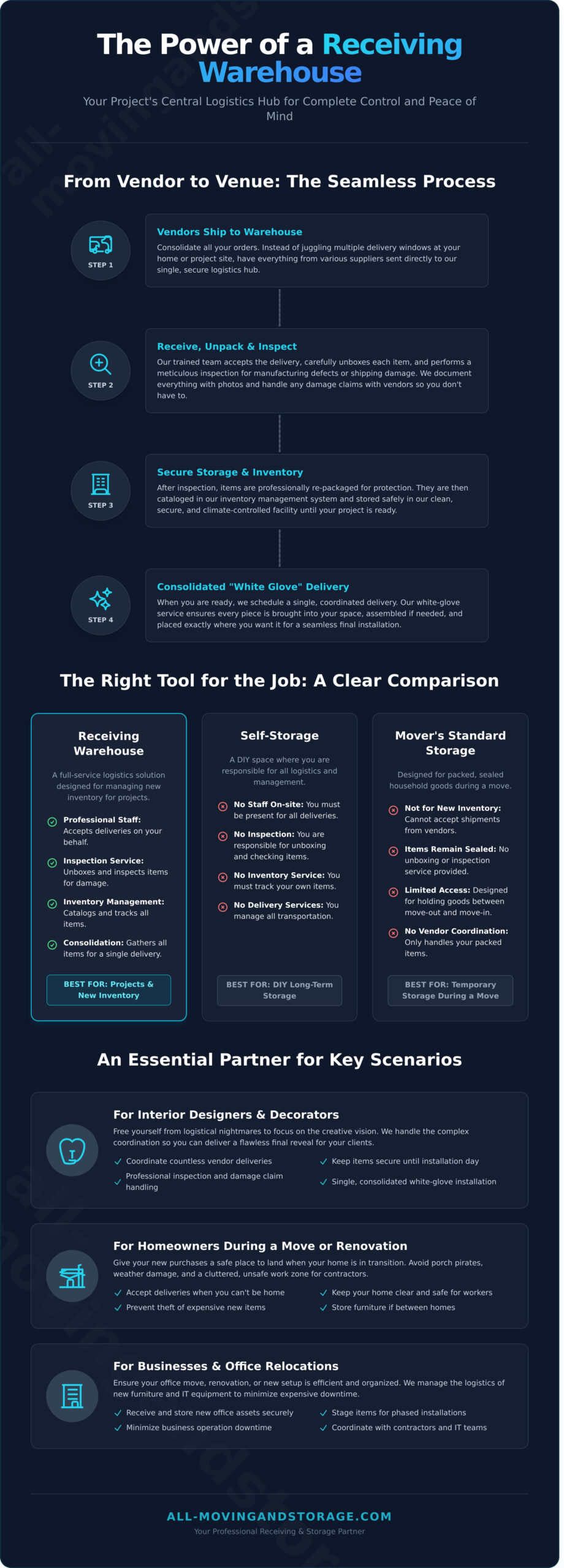
Receiving Warehouse vs. Self-Storage: Key Differences
A self-storage unit is a do-it-yourself solution. You must be present for deliveries, manage inventory, and handle inspections yourself.
A receiving warehouse, on the other hand, is a full-service logistics solution. Professionals accept shipments, inspect each item, manage inventory, and coordinate final delivery. It’s the difference between renting empty space and having a managed logistics partner.
Why You Can’t Just Use Standard Moving Storage
Traditional moving storage is designed for packed household goods that remain sealed until delivery. A receiving warehouse is built specifically to handle new inventory arriving from multiple vendors.
Items are:
- Unboxed
- Inspected for damage or defects
- Photographed and documented
- Repackaged securely for storage
This ensures quality control before final installation.
Who Needs a Receiving Warehouse? Key Scenarios
A professional receiving warehouse is not just for large corporations. It is a practical solution for individuals and businesses managing multiple deliveries for a project.
For Interior Designers & Decorators
Design professionals rely on precise logistics to execute flawless installations. Coordinating shipments from various vendors—furniture, lighting, rugs, artwork—can quickly become overwhelming.
A receiving service allows designers to:
- Send all items to one secure location
- Inspect for shipping damage before client delivery
- Store items safely until installation day
- Consolidate everything for one coordinated white-glove delivery
This protects the design vision and eliminates last-minute surprises.
For Homeowners During Renovation or Relocation
Major home projects come with logistical challenges. A receiving warehouse provides a secure place for new purchases while your home is in transition.
Ideal situations include:
- Renovations where the home isn’t ready to receive deliveries
- Avoiding theft or weather exposure for expensive items
- Keeping construction zones clear and organized
- Collecting furnishings over time for a scheduled delivery
For Businesses & Office Projects
Office relocations and upgrades require careful coordination to minimize downtime.
Businesses use receiving warehouses to:
- Accept new office furniture and equipment
- Store items securely until the space is ready
- Consolidate deliveries for a streamlined installation
The Receiving Process: From Vendor to Your Venue
Using a professional receiving warehouse transforms complex logistics into a structured, stress-free experience. Here’s how the process works:
Step 1: Scheduling & Pre-Arrival
You instruct vendors to ship items directly to our secure warehouse address.
We track expected deliveries and coordinate with carriers to ensure proper receipt.
Step 2: Receiving, Unpacking & Inspection
When shipments arrive:
- Items are unloaded and signed for
- Each piece is carefully unboxed
- A detailed inspection is performed
- Photos and condition reports are created
If damage is identified, you are notified immediately to resolve it with the vendor before installation.
Step 3: Secure Storage & Inventory Management
After inspection:
- Items are labeled
- Entered into a digital inventory system
- Stored in a clean, secure facility
Climate-controlled storage is available for sensitive materials such as wood furniture, artwork, and electronics.
Step 4: Final White-Glove Delivery & Installation
When you are ready:
- All items are consolidated
- Scheduled for one delivery
- Brought inside
- Placed according to your instructions
- Assembled if required
- Packing debris removed
The space is left clean and installation-ready.
What to Look For in a Receiving Warehouse Service
Choosing the right partner is critical. Not all providers offer the same level of professionalism and oversight.
Security, Insurance & Climate Control
Ensure the facility provides:
- 24/7 surveillance
- Controlled access
- Climate-controlled storage
- Clear insurance and valuation options
Detailed Inspection & Reporting
A professional service should:
- Unbox and inspect every item
- Document condition with photographs
- Provide detailed receiving reports
- Notify you immediately of discrepancies
Flexible Storage & Delivery Options
Project timelines change. Choose a provider offering:
- Short-term and long-term storage
- White-glove delivery
- Assembly services
- Consolidated shipments
Your Trusted Partner for Receiving and Storage Solutions
For interior designers, homeowners, and businesses managing complex projects, the right logistics partner is essential. A receiving warehouse is not just storage—it is quality control, consolidation, and protection.
At All American Moving and Storage, we provide secure, climate-controlled receiving warehouse services designed to protect your investments. As a family-owned company serving South Florida, we are fully licensed and insured to manage your valuables with professional care.
Ready to streamline your next project?
Get a Free Quote for Receiving and Storage Services today.
Frequently Asked Questions
What happens if an item arrives damaged?
Our team inspects every item upon arrival. If damage is discovered, we document it with photos and detailed notes and notify you immediately. This allows you to resolve the issue with the vendor before final delivery, preventing delays at installation.
How much does receiving warehouse service cost?
Pricing depends on the volume of items, storage duration, and handling requirements. We provide customized quotes with transparent pricing and no hidden fees. Contact us for a detailed estimate tailored to your project.
Can I access my stored items?
Yes. For security purposes, visits must be scheduled in advance. Our team will assist you during your appointment to ensure safe and organized access to your inventory.
What types of items are best suited for a receiving warehouse?
This service is ideal for:
- Furniture
- Appliances
- Custom cabinetry
- Lighting fixtures
- Artwork
- Fragile décor
It is especially valuable when coordinating multiple deliveries for a single project.
How is a receiving warehouse different from a fulfillment center?
A receiving warehouse is designed for project-based logistics—receiving, inspecting, storing, and consolidating items for installation.
A fulfillment center is built for e-commerce businesses that ship products directly to customers on an ongoing basis.
Is my inventory insured while stored?
We provide standard valuation coverage as outlined in our service agreement. However, we recommend maintaining your own insurance policy for high-value or custom items. We are happy to review coverage details with you to ensure full protection.