
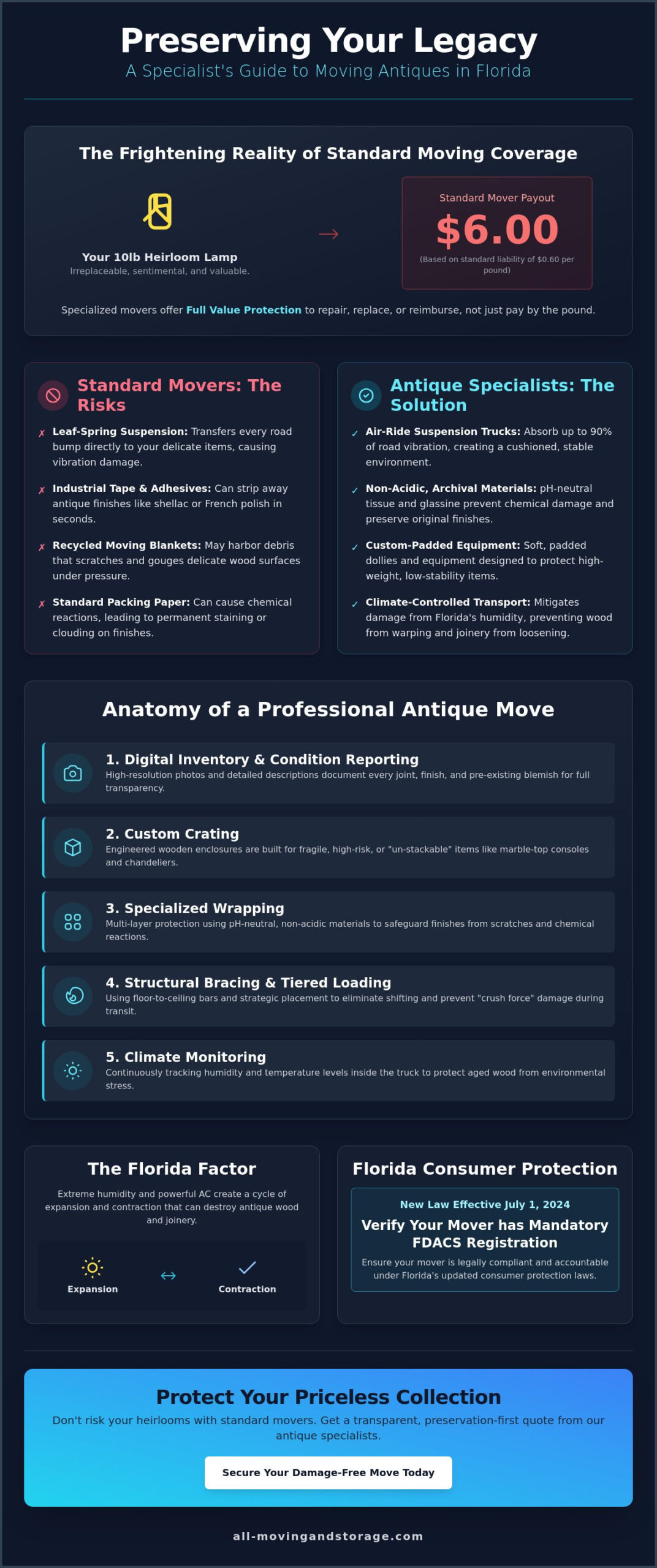
If your 10 pound heirloom lamp breaks during a move, the standard legal coverage in Florida might only pay you $6.00. It’s a frightening reality for collectors, but it highlights why choosing specialized antique furniture movers is a matter of preservation rather than just transportation. You shouldn’t have to worry about whether your 100 year old mahogany desk or delicate porcelain will survive the trip across the Sunshine State. We understand that these pieces are irreplaceable, and the stress of coordinating delicate logistics can be overwhelming.
This guide will help you find total peace of mind by showing you exactly what to look for in a specialist. You’ll learn how to verify mandatory FDACS registration under the July 1, 2024 Florida law, understand the difference between standard valuation and “Full Value Protection,” and ensure your heirlooms are handled with the expert care they deserve. We’ll walk through the essential steps to secure transparent pricing and damage-free delivery for your most prized possessions.
Key Takeaways
- Understand why standard moving blankets and tape are insufficient and how specialized tools protect delicate antique finishes.
- Discover the “Anatomy of a Professional Move,” from custom crating for chandeliers to detailed high-resolution condition reporting.
- Learn how to verify the specific credentials and insurance required for antique furniture movers operating under Florida’s 2024 consumer protection laws.
- Identify the unique environmental risks of moving in Florida and why climate-controlled transportation is essential for preserving old-growth wood.
- Get a step-by-step checklist for preparing your collection, including how to secure loose hardware and apply protective wax barriers.
Why Standard Moving Services Aren’t Enough for Antiques
Standard movers are excellent for modern furniture, but they aren’t equipped for the unique needs of a 19th-century armoire or a delicate Regency-era table. Specialty antique furniture movers provide a preservation-first approach. This involves custom-engineered packing, climate-controlled environments, and technicians trained in fine art handling. While most people understand what qualifies as an antique based on its age, the technical requirements for moving these items are often misunderstood. It’s not just about heavy lifting; it’s about managing the chemistry and physics of aged materials.
Standard moving companies often use industrial-strength tape or recycled moving blankets. These can be catastrophic for old finishes. Adhesive tape can strip away layers of shellac or French polish in seconds. Even standard blankets might harbor debris from previous moves that scratch delicate wood surfaces under the pressure of a strap. For high-value inventories, we assign a dedicated move coordinator. This professional manages the entire logistics chain, ensuring that every piece is documented and handled according to its specific structural needs. This level of accountability is what creates a truly secure moving experience.
The Vulnerability of Aged Materials
Antique wood is a living material that reacts to environmental changes. In Florida, high humidity causes wood to expand, while air conditioning causes it to contract. Over decades, this constant movement stresses the joinery. Dovetail joints can loosen, and delicate veneers can peel if they aren’t supported correctly during transit. Fragile original glass in cabinets requires specialized bracing to prevent vibration damage. Antique structural fatigue is the primary cause of transit damage. This occurs when the inherent weaknesses of aged materials meet the physical stress of a standard truck ride.
Specialty Equipment vs. Standard Gear
You can’t rely on standard warehouse gear for items that are centuries old. Professional antique furniture movers use specialized tools to mitigate risk:
- Air-Ride Suspension: This is mandatory for antique transport. Standard trucks use leaf-spring suspension, which transfers every bump in the road to the cargo. Air-ride systems use compressed air to absorb 90% of road vibration.
- Non-Acidic Packing: We use archival-quality, non-acidic tissue and glassine. Standard packing paper can cause chemical reactions with certain antique finishes, leading to permanent clouding or staining.
- Padded Equipment: Instead of metal dollies, specialists use custom-padded equipment designed for high-weight, low-stability items.
These tools ensure your collection remains stable. We don’t take shortcuts with standard gear because your heirlooms deserve a higher level of protection. Our team is trained to recognize the difference between a sturdy reproduction and a fragile original, ensuring the right equipment is used for every single piece.
The Anatomy of a Professional Antique Move
A professional move is a choreographed sequence of safety measures. While standard movers might start by grabbing a dolly, expert antique furniture movers begin with a camera. This initial step involves creating a comprehensive condition report with high-resolution photos of every joint, finish, and existing blemish. This transparency is vital for your records and aligns with federal consumer protection regulations regarding carrier liability. Once documented, the process moves into a multi-phase protection strategy. You’ll generally see a five-step protocol designed for maximum security:
- Digital Inventory: Cataloging every piece with detailed descriptions.
- Custom Crating: Building external skeletons for high-risk items.
- Specialized Wrapping: Using pH-neutral materials to protect finishes.
- Structural Bracing: Using floor-to-ceiling bars to eliminate shifting in the truck.
- Climate Monitoring: Tracking humidity levels throughout the journey.
Loading is the most critical phase. Specialists don’t just stack boxes; they use tiered loading techniques. Heavier, structurally sound items sit on the floor, while delicate pieces are secured in higher “attic” spaces or individual bays. This prevents “crush force,” which is a common cause of damage in standard moves. If you’re planning a relocation, contact our team to see how our specialists handle these complex requirements.
Custom Crating: When is it Necessary?
Crating isn’t just a box. It’s an engineered enclosure built to the exact dimensions of a single piece. We recommend crating for “un-stackable” items like marble-top consoles, ornate mirrors, or crystal chandeliers. These items have delicate projections that can’t support the weight of moving blankets alone. While crating adds to the initial setup time, it provides a rigid external skeleton. This is often the only way to guarantee that a 150 pound mirror arrives without a single hairline fracture in the frame.
Museum-Grade Packing Materials
The materials touching your furniture are just as important as the person carrying it. We use glassine paper for oil paintings and delicate surfaces because it’s air, water, and grease resistant. You should never allow bubble wrap to touch finished wood directly. The plastic can trap moisture and heat, leading to “ghost marks” or blanching on the finish. For high-value estates, professional packing services are a non-negotiable requirement. Our specialists use multi-layer foam and acid-free paper to create a buffer that absorbs shock and prevents chemical reactions with antique varnishes.
Evaluating Antique Movers: Florida-Specific Risks
Florida presents unique challenges that standard national guides often overlook. Since July 1, 2024, every mover in the state must register with the Florida Department of Agriculture and Consumer Services (FDACS). You should verify this registration on their advertisements and contracts before signing anything. If a company cannot provide their FDACS number, they are operating illegally. This regulation was designed to protect consumers from “rogue movers” that often target high-value shipments, which is why choosing certified antique furniture movers is essential for your legal and physical security.
When interviewing potential antique furniture movers, ask about their specific experience moving in Fort Lauderdale and surrounding coastal areas. The salt air and intense heat require different handling techniques than a move in a temperate climate. A red flag in any quote is the absence of a clear physical address or a refusal to provide a written estimate that outlines all specialty handling fees. Reliable companies will always be transparent about their credentials and their process.
Climate Control and Humidity Management
In cities like Weston or Davie, humidity levels frequently hit 90%. This moisture can cause antique wood to swell within hours. If your new home isn’t ready immediately, you must use climate-controlled storage solutions. Our facilities maintain stable temperature and humidity to prevent the wood from warping or joints from popping. Transitioning an 18th-century chest from 95-degree outdoor heat into a 72-degree air-conditioned room can cause the finish to “check” or crack. We manage this by allowing the piece to acclimate in a controlled environment, slowly lowering the temperature to prevent thermal shock.
Insurance and Valuation Coverage
You must understand the difference between valuation and insurance. By law, Florida movers provide “Released Value” coverage at $0.60 per pound per article at no extra cost. This is rarely enough for a valuable heirloom. We recommend “Full Value Protection,” which typically costs between 1% and 2% of the shipment’s total value. This requires the mover to repair or replace the item at current market rates. For any piece valued over $10,000, a third-party insurance policy is the safest choice. These policies generally cost between 1% and 5% of the item’s value. Always secure a professional appraisal and take clear photos before the movers arrive to ensure a smooth claim process if an accident occurs.
Preparing Your Collection for the Movers
Preparing your home for antique furniture movers requires a level of detail that goes far beyond standard packing. You are protecting more than just furniture; you are preserving history. Start by emptying every drawer and cabinet. Moving an antique with items inside puts unnecessary stress on the joinery and can cause internal damage during transit. If your piece has original brass hardware or loose handles, remove them and place them in clearly labeled bags. This prevents snagging on packing materials and ensures that 100-year-old screws don’t go missing.
We recommend cleaning and applying a fresh coat of high-quality paste wax to all wood surfaces at least 48 hours before moving day. This wax provides a protective barrier against dust and minor abrasions. For specialty items like grandfather clocks, you must remove the weights and pendulums. These components are extremely sensitive to vibration. Similarly, remove all glass shelves from hutches or curios. Wrap these separately in professional-grade padding to ensure they don’t shatter under the pressure of the move.
Create a “High-Value Inventory” list specifically for the moving crew. This document should include the approximate age, estimated value, and a brief description of the condition of each piece. This list acts as your primary reference for the insurance coverage discussed in the previous section. It’s a proactive way to ensure nothing is overlooked during the busy atmosphere of moving day.
Internal Stabilization Techniques
Antique desks and cabinets often feature secret compartments or small cubbies with delicate doors. Use low-tack painter’s tape to secure these internal parts so they don’t swing open. If a table has removable leaves or detachable legs, take them apart yourself to reduce the item’s footprint and risk of snapping. Internal stabilization is the owner’s responsibility unless white-glove service is booked. Taking these small steps prevents structural damage that occurs when internal components shift during the loading process.
Final Walk-Through with Your Mover
When the crew arrives, conduct a final walk-through with the team leader. Point out any previous repairs, hairline cracks, or known structural weaknesses. This helps the movers determine the best grip points for lifting. Review your relocation checklist to ensure every delicate item is accounted for and prioritized. We often use a “first-on, last-off” strategy for antiques. This means they are loaded at the very front of the truck (the “attic”) where they are most stable and will be the last items handled during unloading, reducing the risk of accidental bumps. To ensure your collection receives this level of specialized care, get a free quote from our expert team today.
Why All American Moving and Storage is Your Antique Partner
All American Moving and Storage stands apart from national brokers who often outsource their labor to unknown third parties. We are a family-owned business with a direct stake in every successful delivery. As professional antique furniture movers, we recognize that a 200 year old heirloom isn’t just cargo. It’s a piece of history that requires a specific level of accountability. We treat your belongings with the same care we would give our own family treasures. This personal touch is why collectors across Florida trust us with their most valuable assets.
Our service is designed to be a comprehensive, all-in-one solution. From the moment we arrive for an inventory assessment to the final placement of your furniture, our team handles every detail. We provide professional packing services using the museum-grade materials discussed earlier in this guide. If your destination isn’t ready for your collection, we offer secure, private storage in climate-controlled facilities. Our quotes are transparent and provided without obligation. We don’t believe in hidden fees or surprise “specialty item” surcharges. You’ll know exactly what to expect before the move begins, ensuring total peace of mind throughout the process.
The Local Advantage in South Florida
Our team has specialized knowledge of South Florida’s unique logistics. We regularly serve clients in Weston, Davie, and Fort Lauderdale. We understand the local building restrictions, tight parking scenarios, and the specific climate challenges of the region. Our movers are experts at navigating these hurdles while maintaining the safety of your collection. We know how to handle the sudden rain showers and high humidity that can threaten exposed wood during loading. Whether you’re moving across the street or across the state, we provide immediate availability and a commitment to professional excellence. We are not just a moving company; we are your local partners in preservation.
Get Your Specialized Quote Today
Getting an accurate estimate is the first step toward a successful relocation. We offer free, detailed quotes that account for the specialized handling your antiques require. Our “White Glove” approach is the gold standard for high-value estates, providing the custom crating and structural bracing mentioned earlier in this guide. Our specialists are ready to discuss your specific needs and create a custom plan for your collection. We take the time to listen to your concerns and address the unique requirements of every piece. Don’t risk your irreplaceable items with a standard service that lacks the necessary expertise. GET A FREE QUOTE now to ensure your heirlooms arrive safely and securely.
Secure Your Heirlooms for the Future
Moving a historical collection requires more than just a truck. It demands a partnership with experts who prioritize preservation over speed. You now understand the critical importance of verifying FDACS registration and the technical necessity of using climate-controlled environments to combat Florida’s 90% humidity. By following the preparation steps like internal stabilization and detailed inventorying, you’ve already reduced the risk of transit damage significantly. These proactive measures are the foundation of a successful move.
Choosing the right antique furniture movers ensures your 100 year old pieces arrive in the same condition they left. All American Moving and Storage is a family-owned and fully insured company that has served Weston and Davie for over 10 years. We specialize in the high-stakes logistics of piano and antique moving, providing the specialized care your legacy deserves. Our team is ready to help you navigate this transition with the expert handling and dependability you expect from a local leader.
GET A FREE QUOTE today to start your stress-free relocation. We look forward to helping you move your most precious belongings safely to their new home.
Frequently Asked Questions
Do I need special insurance for moving antique furniture?
You should secure Full Value Protection or a third-party insurance policy for high-value antiques. Standard liability coverage only pays $0.60 per pound, which is inadequate for rare pieces. Full Value Protection requires the mover to repair the item or provide a cash settlement for its current market value. Third-party policies often cost between 1% and 5% of the total shipment value and offer the most comprehensive coverage for irreplaceable items.
What is considered “white-glove” moving service for antiques?
White-glove service is a premium, all-inclusive handling process that includes custom crating, professional packing, and climate-controlled transit. Our antique furniture movers manage every detail from the initial condition report to the final placement in your new home. This service level ensures that technicians use non-acidic materials and specialized equipment to prevent any contact with raw surfaces. It’s the highest standard of care for high-value estates.
How much extra do antique movers typically cost?
Specialized moving services generally cost more than standard relocations because they require additional labor, custom materials, and specialized equipment. Industry reports from 2026 suggest that antique handling can add between $500 and $5,000 to a standard move estimate depending on the volume and fragility of the items. These costs cover the time required for detailed inventorying, custom-built wooden crates, and the use of air-ride suspension vehicles.
Can I leave items inside my antique dresser during the move?
You must empty all drawers and cabinets before the movers arrive. Leaving items inside puts 100% of the weight on the antique joinery, which can cause the frame to warp or collapse during transit. Items shifting inside can also damage delicate internal finishes or secret compartments. Removing all contents ensures the piece is as light and stable as possible, allowing our team to secure the frame properly without internal stress.
How do you protect antiques from Florida’s humidity during a move?
We use climate-controlled vehicles and storage units to maintain stable humidity levels below 55%. Florida’s 90% humidity can cause wood to swell instantly, leading to cracked finishes or stuck drawers. Our technicians also use thermal buffering techniques, allowing pieces to acclimate slowly to temperature changes when moving from the outdoors into air-conditioned spaces. This prevents the wood from experiencing thermal shock, which often causes permanent structural damage.
Should I have my antiques appraised before hiring movers?
You should definitely obtain a professional appraisal for any item valued over $1,000 before your moving date. An official appraisal provides the legal documentation needed to secure third-party insurance and simplifies the claims process if damage occurs. It also helps antique furniture movers understand the specific value and rarity of your collection. Having a certified value on paper ensures you’re not under-insured during the relocation process.
What happens if an irreplaceable antique is damaged during the move?
If damage occurs, you must file a formal claim with the moving company or your insurance provider immediately. If you have Full Value Protection, the mover is responsible for repairing the item to its pre-move condition or providing a cash settlement for the current market value. This is why the high-resolution photos taken during the pre-move inventory are so vital. They provide the evidence needed to prove the condition of the piece before transit began.
Do you offer climate-controlled storage for antiques in Davie, FL?
Yes, we provide secure, climate-controlled storage facilities specifically designed for delicate items in the Davie area. Our units maintain consistent temperature and humidity levels to protect wood, leather, and fabric from Florida’s environmental risks. This is a private, monitored solution for families who need a gap period between homes. We ensure your antiques remain in a stable environment until you’re ready for final delivery and professional setup.