
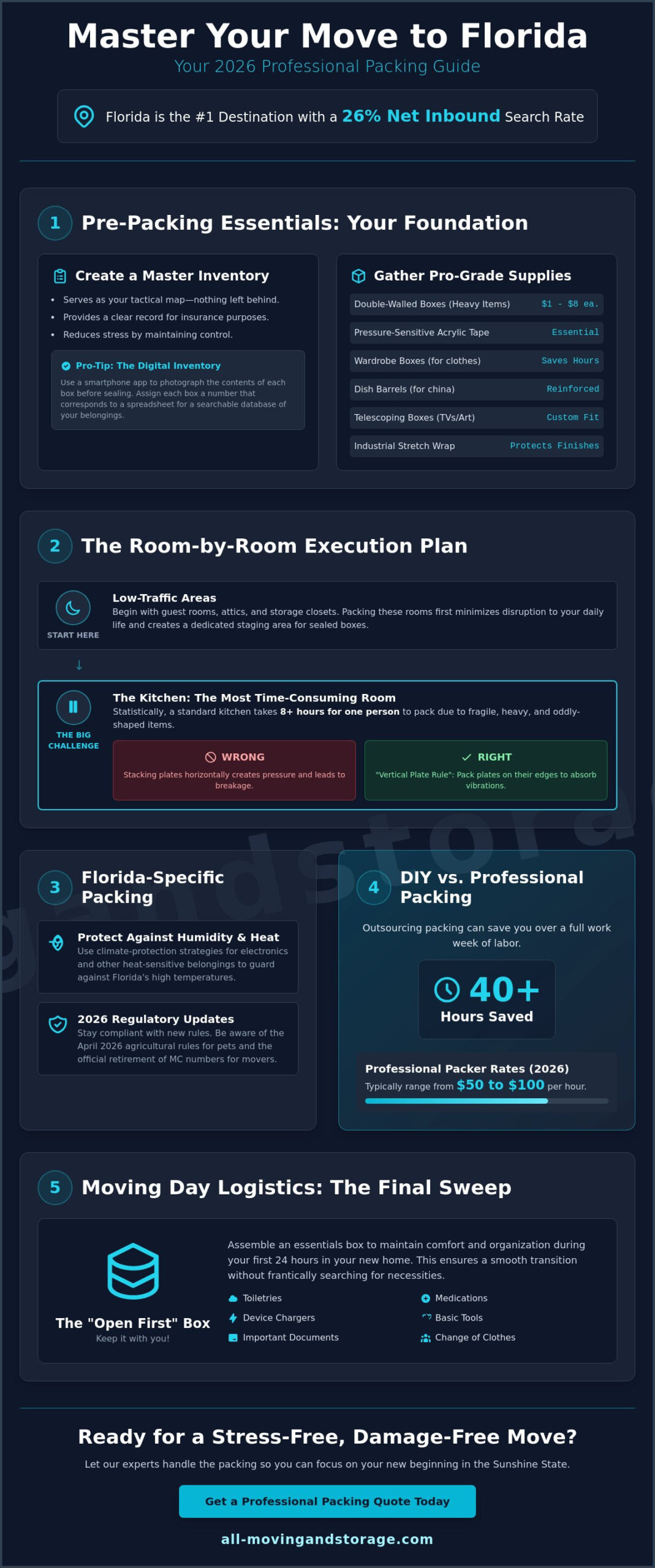
Did you know that in early 2026, Florida reached a 26% net inbound search rate, making it the top destination for families on the move? With thousands of people heading to the Sunshine State, the primary concern for most is how to pack for a move without breaking precious heirlooms or ending up completely exhausted. It’s normal to feel overwhelmed by the volume of your belongings and the fear that disorganization will lead to a chaotic first week in your new home. You deserve a transition that’s handled with care and professional precision.
We’re here to help you achieve a damage-free move and an organized unpacking process. This guide promises to provide expert room-by-room strategies and Florida-specific secrets, such as navigating the April 2026 agricultural rules for pets and understanding current professional packing rates of $50 to $100 per hour. We’ll provide a clear preview of professional techniques for fragile items, essential 2026 regulatory updates like the retirement of MC numbers, and a structured plan to reduce moving-day stress. By the end of this article, you’ll have the confidence to manage your relocation like a seasoned pro.
Key Takeaways
- Create a master inventory and secure professional-grade supplies to ensure every item is accounted for and protected during transit.
- Master how to pack for a move using a structured room-by-room execution plan that prioritizes low-traffic areas and complex spaces like the kitchen.
- Guard your electronics and heat-sensitive belongings against Florida’s humidity and high temperatures with expert climate-protection strategies.
- Evaluate the cost-benefit of professional packing services to determine if outsourcing can save you 40 or more hours of labor.
- Assemble an “Open First” essentials box to maintain organization and comfort during your first 24 hours in the new home.
Pre-Packing Essentials: Inventory and Professional Supplies
Starting a relocation without a plan is a recipe for chaos. Success begins with a comprehensive Master Inventory list created before you touch a single box. This document serves as your tactical map. It ensures nothing gets left behind and provides a clear record for insurance purposes. Organizing your belongings early can significantly mitigate the psychological effects of moving, which often stem from a perceived loss of control over your environment. Understanding how to pack for a move involves more than just putting items in containers; it is about strategic preservation and mental peace of mind.
In 2026, professional standards require high-quality, pressure-sensitive acrylic tape. Standard office supplies or cheap masking tape often fail during transit, especially in humid climates where adhesives can lose their grip. You also need professional-grade materials like double-walled boxes for heavy items, clean newsprint for cushioning, and industrial stretch wrap to secure furniture. While individual boxes range from $1 for small sizes to $8 for heavy-duty options, the protection they offer is worth the investment. Implementing a color-code system by assigning a specific color to each room allows our team to unload your items into the correct spaces instantly. This efficiency saves time and reduces the exhaustion of searching for misplaced boxes later.
The Digital Inventory Strategy
Modern technology has simplified the process of how to pack for a move. We recommend using smartphone apps to photograph the interior of every box before sealing it. Assign a unique number to each box that corresponds with a line item on your master spreadsheet. This creates a searchable database of your belongings. If you need to find a specific kitchen gadget, you’ll know exactly which box contains it. Maintain a separate “High-Value” list for jewelry, small electronics, and vital documents. Don’t put these in the moving truck; keep them with you to ensure they remain secure and accessible throughout the journey.
Specialized Packing Materials You Actually Need
Professional packing requires more than just standard cubes. Wardrobe boxes allow you to transfer clothes directly from the closet on their hangers. This saves hours on folding and ironing. For the kitchen, dish barrels are essential. They feature thicker, reinforced walls compared to standard small boxes, providing a necessary buffer for fragile china. If you have mirrors, large artwork, or flat-screen TVs, use telescoping boxes. These adjustable containers provide a custom fit that prevents shifting and absorbs shocks during the journey. Stretch wrap is particularly useful for protecting furniture finishes and keeping cabinet doors closed without leaving the sticky residue associated with tape. Using the right tools is the most reliable way to guarantee your belongings arrive safely.
The Room-by-Room Packing Execution Plan
A successful relocation depends on a logical order of operations. Start with your low-traffic areas, such as guest rooms, attics, and seasonal storage closets. These spaces contain items you don’t use daily, making them the perfect starting point for learning how to pack for a move without disrupting your routine. Completing these rooms early also creates a dedicated staging area for finished boxes. While you focus on these initial stages, ensure you complete your official USPS change of address at least two weeks before your move date to prevent mail gaps.
The kitchen is statistically the most time-consuming room in any home. It contains a high volume of fragile, oddly shaped, and heavy items. Professional estimates suggest a standard kitchen can take upwards of eight hours for a single person to pack correctly. If your schedule is tight, our packing services provide a fast and efficient solution to ensure your breakables are secured by experts. In the living room, focus on electronics and upholstery. Use original boxes for televisions if available, or utilize the telescoping boxes mentioned in our supplies section. Roll area rugs with the pile facing inward and secure them with plastic ties to prevent unravelling during transit.
Kitchen and Dining Room Tactics
Breakage often occurs because of improper weight distribution. Follow the “Vertical Plate” rule: always pack plates and saucers on their edges rather than stacking them horizontally. Stacking creates pressure on the bottom items, while vertical placement allows the edges to absorb vibrations. Use cell dividers for stemware and crystal to prevent glass-on-glass contact. For the pantry, tape shut any open containers and place heavy canned goods in small boxes to keep the weight manageable. Never pack perishables or glass jars of liquid that could leak and damage other boxes.
Bedrooms and Fragile Decor
Bedrooms require a mix of “Essentials” and “Long-term” strategies. Pack off-season clothing and extra linens first. For your current wardrobe, use the “Bundle Wrap” method. Keep clothes on their hangers, wrap them in large unscented trash bags or specialized garment covers, and move them directly into wardrobe boxes. This technique keeps your clothes clean and ready to hang in the new home immediately. Since Florida migration remains high in 2026, protect your mattresses from dust and local pests by using heavy-duty plastic covers. For shadow boxes and antiques, use a double-wrap method with bubble wrap and a final layer of packing paper to create a shock-absorbent shield for your most precious heirlooms.
Florida-Specific Packing: Humidity, Heat, and Outdoor Gear
Florida’s climate demands a specialized strategy for anyone learning how to pack for a move. In early 2026, Florida saw a 26% net inbound search rate, bringing thousands of families into a region where humidity regularly exceeds 70%. This moisture isn’t just uncomfortable; it’s a direct threat to your belongings. High temperatures inside a moving truck can quickly damage items that would be perfectly safe in cooler states. You must categorize your belongings by their environmental sensitivity to ensure they arrive in the same condition they left. Our team prioritizes these climate factors to keep your items secure and dry.
Heat-sensitive items require climate-controlled transport or personal handling. Candles can melt and ruin surrounding items if packed in standard boxes. Vinyl records are another major concern; they begin to warp at temperatures as low as 100 degrees Fahrenheit. Since the interior of a trailer in South Florida can easily surpass 120 degrees, these should never be placed in a moving truck. Similarly, certain medications lose their chemical stability when exposed to extreme heat. Consult a comprehensive moving checklist to identify which items should stay in your air-conditioned vehicle during the transition.
Adopting a “Hurricane Prep” mindset is also essential for storage. If you’re placing boxes in a garage or a non-climate-controlled unit, keep them at least four to six inches off the ground. Use pallets or heavy-duty shelving to protect against potential water seepage from heavy tropical downpours. This proactive step prevents floor-level moisture from wicking into cardboard and causing structural failure or mold growth. It’s a simple precaution that saves thousands in potential damage.
Electronics and Humidity Control
Humidity is the primary enemy of circuit boards and internal components. When you’re figuring out how to pack for a move in Florida, include silica gel packets in every box containing sensitive tech. These packets absorb ambient moisture and prevent condensation from forming inside your devices. Never leave electronics in a moving truck overnight, especially in areas like Davie where the heat index remains high even after sunset. Use anti-static bubble wrap for computer towers and home servers. This material protects against static discharge while providing a buffer against physical shocks.
Pool and Garden Equipment Safety
Outdoor gear presents its own set of challenges. Before packing, drain every drop of water from garden hoses and pressure washers. Any residual moisture can leak into other boxes, leading to mold growth in the humid Florida air. Professional movers cannot legally transport hazardous materials, including pool chemicals like chlorine or muriatic acid. You’ll need to dispose of these properly or move them yourself in a secure, upright container. For heavy planters and garden statues, remove the soil first to reduce weight. Wrap these items in heavy-duty moving blankets to prevent cracking during transport.
DIY vs. Professional Packing: Making the Right Choice
Deciding how to pack for a move requires a realistic look at your calendar. A typical three-bedroom home takes approximately 40 to 60 hours to pack thoroughly. If your relocation is happening on a tight schedule, these hours are often unavailable. Professional packing rates in 2026 range from $50 to $100 per packer, per hour. While DIY supplies for a standard home cost between $100 and $300, the labor involved is the true expense. You must weigh the hourly cost of your own time against the efficiency of a skilled crew. Learning how to pack for a move is a valuable skill, but delegating the task is often the most professional choice for busy families.
Risk assessment is another critical factor in your decision. The average cost to pack a 2-bedroom home in 2026 is $600 to $1,500, whereas a 3-bedroom home ranges from $1,200 to $2,500. This investment acts as a safeguard for your most valuable belongings. Many insurance valuations require professional packing to provide full replacement coverage. If you pack a box yourself and the contents break, most carriers only offer minimal reimbursement based on weight. Professional packers use certified techniques and double-walled boxes that significantly reduce the risk of damage during transit. If the cost of replacing your dining set or electronics exceeds the packing fee, hiring experts is the logical financial move.
When to Call the Professionals
Hiring experts is the right choice for homes with three or more bedrooms or high volumes of fragile goods. If you have physical limitations or health concerns, the repetitive bending and lifting required for packing can be hazardous. Last-minute moves also demand professional intervention. When time is your most expensive commodity, a professional team can finish in one day what might take you two weeks. This allows you to focus on your work and family while we handle the heavy lifting.
The Benefits of All American Professional Packing
Our “Care-First” approach is designed specifically for residents in Weston and Davie who own high-value items like pianos and antiques. We don’t just use standard boxes; our team utilizes specialized crates and heavy-duty wrap for maximum protection. We can also integrate our services with secure storage solutions for a seamless transition if your new home isn’t ready. This all-in-one approach ensures your belongings are handled by the same trusted experts from start to finish. Our goal is to make your transition as smooth and stress-free as possible.
Ready to save time and protect your valuables? GET A FREE QUOTE for our professional packing services today.
Moving Day Logistics: The ‘Open First’ Box and Final Sweep
The final 24 hours of a relocation are often the most hectic. Even if you’ve mastered how to pack for a move throughout the previous weeks, the way you handle the final day determines how quickly you’ll feel at home in your new space. Success at this stage requires a tactical approach to the items you’ll need immediately upon arrival. You don’t want to be hunting through fifty identical boxes for a toothbrush or a phone charger after a long day in the Florida sun. Organizing your final items ensures a smooth transition and keeps your first night comfortable and stress-free.
A professional secret to an organized move is the “Load Last” strategy. This involves identifying specific boxes that should be placed on the truck at the very end so they’re the first items unloaded at your new home. These typically include cleaning supplies, basic tool kits, and pet essentials like food bowls and leashes. Before the movers arrive, perform a comprehensive final sweep. Check the interior of the dishwasher, the high shelves in closets, and the very back of the pantry. It’s also vital to look inside “hidden” storage areas like the attic or crawl space. Utilizing a detailed relocation checklist is your best friend during this phase to ensure no detail is overlooked.
The ‘First Night’ Survival Kit
Every family member needs an “Open First” box or a personal bag containing their immediate essentials. This kit should include basic toiletries, a change of clothes, bedding, and all necessary chargers. Keep your most important documents, such as passports, leases, and moving contracts, in a personal bag that stays with you rather than on the truck. Given the intense South Florida heat, prioritize snacks and hydration. Have a cooler ready with water and electrolyte drinks to keep everyone energized during the move-in process. Having these items accessible prevents the exhaustion of searching through sealed containers when you’re ready to rest.
Final Preparations for the Movers
Once you’ve finished the heavy lifting of how to pack for a move, prepare your home for the crew’s arrival. Clear all pathways of debris and secure your floors with runners or cardboard to protect against heavy foot traffic. If you have fragile boxes that require extra care, set them aside and communicate those instructions clearly to your lead mover. Our team appreciates clear directions and a safe workspace, which allows us to work with maximum efficiency. Taking these small steps helps maintain the high standards of safety and reliability you expect from a professional service.
Ready for a stress-free move? Get a free quote from All American Moving and Storage today!
Secure Your Move with Professional Precision
Mastering how to pack for a move is the most effective way to ensure your belongings arrive safely at your new Florida residence. By implementing a digital inventory strategy and using specialized supplies like double-walled boxes and silica gel packets, you protect your assets from both physical damage and the region’s 70% humidity levels. Whether you choose to handle the process yourself or utilize professional labor, starting with a clear, room-by-room execution plan reduces the chaos of transition day. These steps are essential for a damage-free experience in 2026.
All American Moving and Storage is a family-owned and operated company in South Florida dedicated to your peace of mind. We are fully licensed and insured; our team consists of specialists in fragile item and piano moving. We provide the dependable expertise you need for a fast and efficient relocation. Get Your Free Professional Moving & Packing Quote today and let us handle your needs with care. We look forward to making your 2026 move a successful and organized experience.
Frequently Asked Questions
How far in advance should I start packing for a move?
You should begin the packing process six to eight weeks before your scheduled move date. This timeline allows you to tackle one room at a time without feeling overwhelmed. Start with seasonal items and guest rooms. Since 11.8% of adults moved in 2024, we’ve found that early preparation is the single most important factor for a stress-free transition. It gives you enough time to sort your belongings properly.
What items should I never pack in a moving truck?
Never pack hazardous, flammable, or perishable items in a moving truck. This includes propane tanks, pool chemicals, and aerosol cans. Movers cannot legally transport these materials due to safety regulations. You should also keep high-value personal items like jewelry, passports, and 2026 medical certifications with you in your personal vehicle. This ensures your most vital documents remain secure and accessible throughout the journey.
Is it cheaper to buy my own boxes or get them from a moving company?
Sourcing your own boxes is generally cheaper, but professional-grade supplies offer significantly better protection for your belongings. While 2026 market data shows DIY materials cost between $100 and $300, professional boxes are double-walled to prevent crushing. High-quality boxes are a smart investment when you’re deciding how to pack for a move because they reduce the risk of expensive damage during transit.
How do I pack fragile items like mirrors and glass tabletops?
Pack mirrors and glass tabletops using specialized telescoping boxes and heavy-duty bubble wrap. First, place an “X” of painter’s tape across the glass to prevent shattering if an accident occurs. Wrap the item in several layers of packing paper and bubble wrap before sliding it into the adjustable box. This creates a custom, secure fit that prevents the glass from shifting while the truck is in motion.
Can I leave clothes in my dresser drawers when I move?
You can leave lightweight clothing in dresser drawers if the furniture piece is sturdy and the move is local. Avoid leaving heavy items, books, or fragile valuables inside. If you’re moving a large antique or a piece made of particle board, it’s safer to empty the drawers entirely. This reduces the total weight and prevents the frame from warping or cracking under pressure during the relocation.
What is the best way to pack a kitchen for a move?
The most efficient way to pack a kitchen is to use reinforced dish barrels and pack all plates vertically on their edges. Kitchens are the most time-consuming areas, often requiring eight full hours of labor for a standard home. Use cell dividers for your glassware to prevent glass-on-glass contact. This method is a core part of how to pack for a move because it utilizes the strongest part of the dish to absorb vibrations.
How do I protect my furniture from scratches and dents?
Protect your furniture by using professional moving blankets and industrial-grade stretch wrap. Wrap the entire piece in a thick blanket first to provide a cushion against dents and surface scratches. Then, use stretch wrap to hold the blanket securely in place. This technique prevents the plastic from sticking directly to wood finishes, which can cause damage in Florida’s high heat and humidity.
What happens if the movers break something I packed myself?
Movers typically offer limited liability for boxes packed by the owner unless there is clear evidence of external damage to the box. If the exterior of the container is undamaged, it’s difficult to prove that the movers caused the internal breakage. For maximum protection, consider professional packing services. This ensures your items meet the high standards required for full replacement value insurance coverage and peace of mind.