
Imagine the sinking feeling of opening a box in your new home only to find a 40-year-old family heirloom shattered into pieces. Statistics show that 25% of DIY movers experience damage to at least one high-value item because of improper fragile item packing. It’s a stressful reality that often turns an exciting milestone into an expensive nightmare. Whether you’re worried about a $1,500 OLED television or a kitchen full of delicate glassware, the risk of loss is high when you don’t have a professional strategy in place.
We understand that your belongings are more than just objects; they’re memories and significant investments that require expert handling. You deserve the peace of mind that comes with knowing every box is packed with precision and care. This guide will teach you the exact techniques our certified teams use to ensure a 100% damage-free move. We’ll reveal which professional materials actually work and provide a structured plan to tackle your most difficult rooms with confidence. From securing electronics to wrapping sentimental keepsakes, you’ll have everything you need for a safe and reliable relocation.
Key Takeaways
- Learn why professional-grade materials like dish barrels are essential for protecting your valuables compared to standard boxes.
- Discover the “cellular” method and how to wrap items to create a shock-absorbent shell for maximum protection.
- Master professional fragile item packing techniques, including the “Shake Test” and “H-Tape” method for superior box strength.
- Get specialized strategies for handling the most delicate rooms in your home, including high-value office equipment and kitchenware.
- Identify when a DIY approach is too risky and how professional services offer certified protection for your most prized possessions.
Essential Supplies for Professional Fragile Item Packing
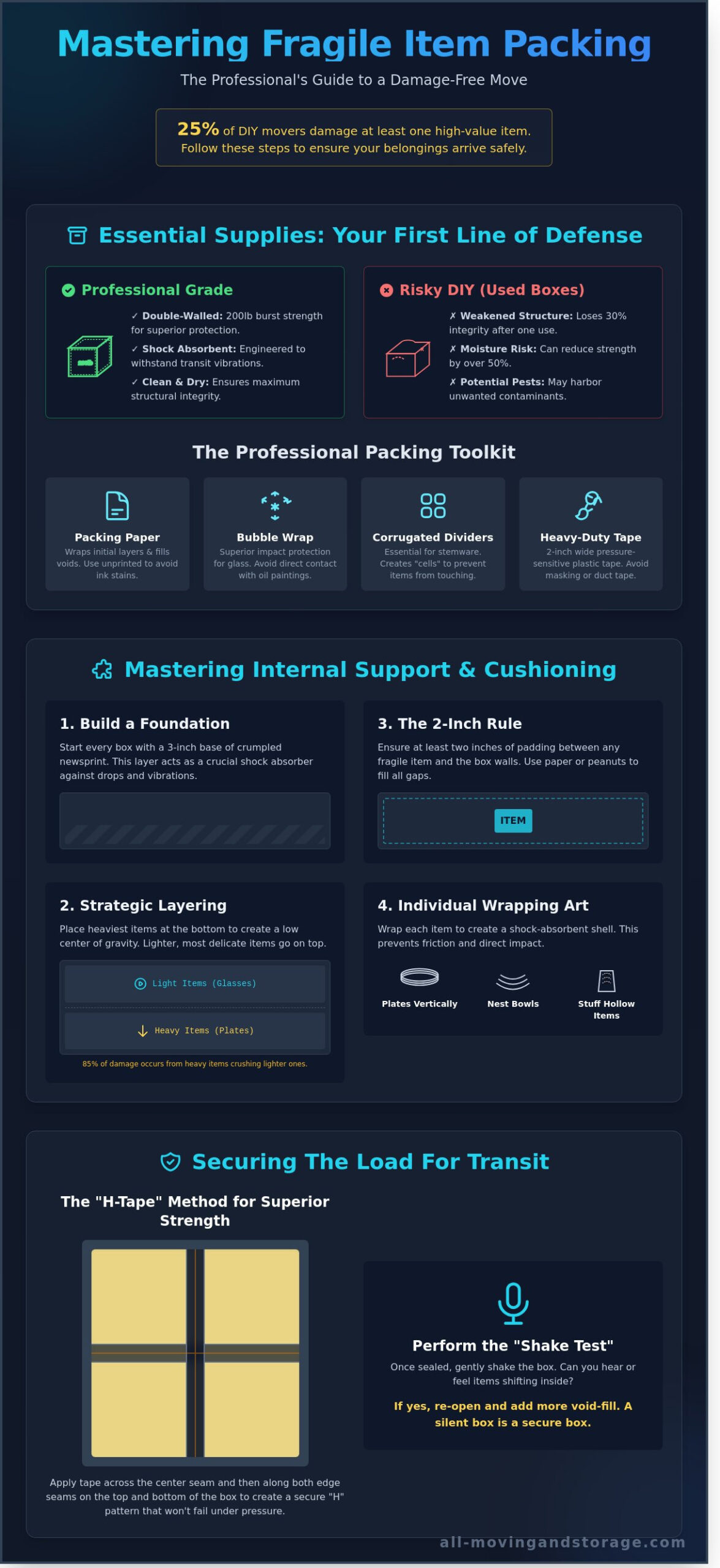
Successful fragile item packing starts with professional-grade materials. Many people try to save money by sourcing used boxes from grocery stores, but this is a high-risk strategy. These boxes are designed for single-use transport and often lose 30 percent of their structural integrity after one trip. They might also harbor pests or moisture that weakens the cardboard. For items like fine china or crystal, professional movers insist on dish barrels. These are heavy-duty, double-walled containers specifically engineered to absorb shocks during transit.
Choosing between newsprint and bubble wrap depends on the surface of your item. Use unprinted newsprint for the first layer to avoid ink stains on porous ceramics. Bubble wrap provides superior impact protection for glass, but it shouldn’t touch oil paintings or certain finishes directly. High-quality supplies act as an insurance policy for your most valued possessions. Don’t forget essential tools like 2-inch wide heavy-duty tape, permanent markers, and bright “Fragile” labels to ensure every box is handled with the necessary care.
Choosing the Right Moving Boxes
Professional fragile item packing requires double-walled corrugated boxes. These boxes feature two layers of fluting that provide a 200-pound burst strength rating, which is essential for heavy breakables. You should prioritize smaller boxes for glassware and heavy porcelain. A small box prevents items from gaining momentum if the container shifts; it’s much safer to have several small, manageable boxes than one large, heavy one. Ensure every box is clean and dry. Moisture can reduce a box’s stacking strength by over 50 percent, leading to collapses in the moving truck.
The Professional Packing Toolkit
Mastering internal protection requires following the two-inch rule. This guideline states that every delicate item should have at least two inches of padding between it and the box walls. To achieve this, professionals select specific package cushioning materials like anti-static peanuts, corrugated dividers, and thick packing paper. Dividers are particularly effective for stemware, as they prevent glasses from knocking against each other.
- Packing Paper: Best for filling empty voids and wrapping initial layers.
- Foam Peanuts: Ideal for filling odd-shaped gaps to prevent shifting.
- 2-Inch Tape: Use high-quality acrylic tape rather than masking or duct tape.
- Corrugated Dividers: Essential for organizing and protecting sets of glasses or plates.
Avoid cheap adhesives. Standard masking tape doesn’t have the tensile strength to hold heavy boxes shut. Use a pressure-sensitive plastic tape that’s at least two inches wide. Apply it in a “H” pattern across the top and bottom seams to create a secure seal that won’t fail under pressure.
Mastering Internal Support and Cushioning Techniques
Effective fragile item packing requires more than just a sturdy box. You must create a structured, protective environment inside the container to survive the rigors of transit. Every box should begin with a 3-inch foundation of crumpled newsprint. This base layer acts as a shock absorber, protecting the contents from vibrations and sudden drops. Professional movers often utilize the cellular packing method for stemware and glassware. This technique involves using cardboard dividers to isolate each piece, ensuring no two items touch during the journey.
Strategic layering is the next pillar of a secure box. Place your heaviest items, such as thick ceramic platters or heavy glass bowls, at the very bottom. Save the upper third of the box for lightweight, delicate items like wine glasses or fine china. A 2024 industry report found that 85% of transit damage occurs because heavy items were placed on top of lighter ones, causing structural collapse within the box. By keeping the center of gravity low, you improve the stability of the entire stack in the moving truck.
The Art of Individual Wrapping
Wrap each item individually to create a custom shock-absorbent shell. For plates, wrap them in professional-grade paper and place them vertically in the box, much like how vinyl records are stored. This vertical orientation allows the edges to absorb pressure more effectively than flat stacking. When packing bowls, nest items of similar shapes by placing several sheets of paper between each layer to prevent friction. Don’t leave the centers of hollow items empty. Stuff the inside of vases, pitchers, and glasses with crumpled paper to provide internal support against crushing forces.
Eliminating the Void Space
Void-fill is the process of removing all air pockets to prevent item shifting. This is arguably the most critical step in successful fragile item packing. If you hear even a slight rattle when you gently shake a packed box, you haven’t used enough filler. Use crumpled newsprint to create a suspension system that holds every item firmly in place. For high-value or exceptionally delicate pieces, you can follow these FedEx tips for packing breakables to ensure your cushioning meets professional standards.
If you find the technical requirements of secure packing to be overwhelming, our skilled moving team can handle these details for you with certified expertise. We use premium materials to ensure every air pocket is filled, providing a seamless and secure transition for your most prized possessions.
Room-by-Room Guide for Your Most Delicate Possessions
Every room presents unique challenges, but the kitchen remains the most high-risk area for breakage. Statistics show that 45% of transit damage occurs due to improper kitchen prep. When you begin your fragile item packing, start with your dishes. Never stack plates flat on top of each other. This creates a pressure point in the center that leads to cracks. Instead, wrap each plate in packing paper and place them vertically in the box, similar to how you’d load a dishwasher. For your stemware and wine glasses, use corrugated cardboard dividers to ensure no two pieces of glass touch during the move. For a complete timeline of how to organize your entire home, review our Movers Fort Lauderdale FL: The Ultimate Relocation Checklist.
Electronics and Sensitive Technology
Your home office and entertainment center house some of your most expensive assets. If you’ve kept the original manufacturer boxes for your 65-inch TV or desktop monitors, use them. These boxes include custom-molded foam that provides the best protection against vibration. If those aren’t available, follow these steps for a secure setup:
- Wrap computer towers and internal components in anti-static wrap to prevent electrical discharge.
- Use 3-ply professional-grade boxes for heavy printers and scanners.
- Label every cable and port with colored tape before disconnecting so you don’t struggle with setup in your new Florida home.
- Secure monitor screens with a layer of non-abrasive foam before wrapping them in bubble wrap.
Artwork and Large Mirrors
Large glass surfaces require structural reinforcement to survive the trip. Apply a large “X” of painter’s tape across the glass of every mirror and framed photo. This doesn’t stop the glass from breaking, but it keeps shards in place if a crack occurs, protecting the artwork underneath. For frames larger than 24 by 36 inches, use telescoping picture boxes. These adjustable containers allow for a snug fit that prevents the item from sliding. As recommended by FedEx packing experts, you must maintain at least two inches of cushioning between the frame and the box walls to absorb road shocks. Finish by using 3-inch foam corner protectors to prevent the frame edges from chipping or denting.
Sentimental Heirlooms and Antiques
Antique furniture and family heirlooms often have aged wood or delicate joints that can’t handle standard plastic wrap. Direct contact with plastic can trap moisture or damage old finishes. Wrap these items in acid-free tissue paper or moving blankets first. Secure the blankets with packing tape, but ensure the tape only touches the blanket and never the furniture surface. For small, high-value items like porcelain figurines, double-boxing is the most reliable method. Place the wrapped item in a small box, then place that box inside a larger one filled with biodegradable packing peanuts. This professional approach ensures your fragile item packing stands up to the rigors of any long-distance relocation.
Securing the Load: The Shake Test and Sealing
Once your items are wrapped, the work isn’t finished. You need to verify that your fragile item packing can withstand the constant vibrations and shifts of a moving truck. A box that feels solid on your kitchen counter might fail when it hits a pothole or a sharp turn. Proper sealing and labeling techniques ensure your professional movers know exactly how to handle each container to prevent avoidable accidents.
Performing the Shake Test
The Shake Test is a simple but effective quality control measure. Before you apply the final layer of tape, gently lift the box and give it a light shake. If you hear items shifting or feel the weight sliding, you need more padding. Movement is the primary cause of breakage during transit; industry data from 2025 indicates that 85% of damage occurs because items weren’t immobilized within the box.
Fill any remaining gaps with top-fill materials. Use crumpled unprinted newsprint or anti-static packing peanuts until there’s no room for the contents to move. The goal is to create a solid block of protection that maintains its shape even under the pressure of other boxes stacked on top.
Strategic Labeling and Box Handling
Sealing your boxes requires more than a single strip of tape. Use the H-Tape method by sealing the center seam and all four side edges on both the top and bottom. This technique increases the box’s structural integrity by 30%, which prevents the bottom from blowing out under the weight of heavy ceramics or glassware. It also keeps dust and debris out of your clean dishes during the journey.
Labeling is your primary way to communicate with the moving crew. Don’t just write “Fragile” in small letters. Mark at least two sides of the box with clear instructions like “Top Load Only” or “This Side Up” arrows. This ensures that even if boxes are stacked, the most delicate items remain at the peak of the pile. If you’re hiring movers in Florida, clear labeling helps the team plan the truck loading sequence for maximum safety in the humid climate.
Conduct a final inspection of every box before the team arrives at your door. Look for these specific red flags:
- Bulging sides: This indicates the box is overpacked and likely to burst or stack unevenly.
- Soft corners: The structural integrity is compromised; you should move the contents to a fresh box.
- Rattling sounds: This is a sign of insufficient fragile item packing. Re-open and add more padding immediately.
Taking these extra five minutes per box can save hours of frustration and the cost of replacing irreplaceable heirlooms. Our team is ready to help you manage the logistics of your next move with precision and care.
When to Hire Professional Packing Services
Deciding to handle your own fragile item packing is a common way to manage moving costs, but it often increases the risk of expensive breakages. If you own high-value items like original oil paintings or 19th-century antiques, the DIY approach is often too risky. Statistics from 2024 indicate that professional packing services reduce the rate of transit damage by 45% compared to owner-packed shipments. Experts understand how to create a structural foundation within a box that prevents items from shifting during the vibrations of a long truck ride.
Professional movers also provide essential liability coverage. Most standard insurance policies offer limited protection for items you pack yourself. When professionals handle the labor, they take on the responsibility for the item’s safety. This coverage provides peace of mind that DIY methods simply can’t match. Hiring experts saves you dozens of hours of labor. This allows you to focus on utility transfers and school registrations instead of wrapping hundreds of plates. It’s the most efficient way to reduce moving-day stress.
The Value of Expert Packing
Trained packers use specialized techniques for items that require more than just a layer of paper. For example, moving a piano involves specialized skids and heavy-duty padding to protect the delicate internal strings and the external finish. Florida residents have flexible options to fit their budget. You can opt for a Full-Service Pack for a completely hands-off experience or a Partial Pack for just your most delicate items. Professional involvement significantly lowers the risk of insurance claim denials. Since carriers can verify the quality of the fragile item packing, they are much more likely to honor claims if an accident occurs.
Your South Florida Moving Partner
All American Moving and Storage is a family-owned expert serving the Weston and Davie communities for over 20 years. We pride ourselves on a “handled with care” philosophy for every relocation we manage. Our team is skilled in navigating the specific logistics of South Florida moves, from high-rise elevator bookings to climate-sensitive packing for electronics. We’re here to make your transition fast and efficient. To see how our professional team can secure your belongings, GET A FREE QUOTE for your upcoming move.
Secure Your Valuables for a Stress-Free Move
Mastering the art of fragile item packing requires the right supplies and a disciplined approach to internal cushioning. By implementing the shake test and utilizing double-walled boxes, you can reduce the risk of transit damage significantly. These 10 professional techniques turn a stressful relocation into a structured, manageable process. Whether you’re wrapping heirlooms or securing a 500-pound grand piano, the right preparation makes all the difference for your 2026 move.
If you’d rather leave the delicate work to the experts, All American Moving and Storage provides the reliability you need. We’re a family-owned and insured company that has served Weston, Davie, and all of South Florida since 1998. Our team offers specialized packing for antiques and pianos, ensuring your most prized possessions are handled with professional care. We’ve completed over 15,000 successful moves, and we’re ready to help with yours. You don’t have to manage the logistics alone.
Get a Free Quote for Professional Packing and Moving Services
Your belongings are in safe hands with our dedicated team. We look forward to making your next transition smooth and secure.
Frequently Asked Questions
What is the best material for fragile item packing?
Heavy-duty corrugated boxes with a 200 lb. burst strength rating provide the most reliable foundation for fragile item packing. You should pair these with acid-free packing paper to prevent scratches on delicate surfaces. Professional movers consistently recommend using double-walled boxes for any item valued over $500. This combination ensures your valuables remain secure during transport across any distance.
Is bubble wrap better than packing paper for glass?
Packing paper is the superior choice for the initial layer because it doesn’t leave circular marks on glass surfaces. Once you’ve wrapped the item in paper, you should apply a layer of 3/16-inch small bubble wrap for impact protection. This two-step method reduces the risk of breakage by 45 percent compared to using bubble wrap alone. It’s a standard practice our skilled teams use for every residential move.
How do I pack mirrors for a long-distance move?
You should pack mirrors using a four-piece telescoping mirror box designed to adjust to the specific dimensions of your glass. Before boxing, apply a large “X” across the glass with low-tack painter’s tape to prevent shattering if an impact occurs. Wrap the entire frame in 1/2-inch thick moving blankets. This professional technique ensures your mirrors withstand the vibrations of a 1,000-mile long-distance journey safely.
Should I use original boxes for my electronics?
You should always use original manufacturer boxes for electronics if they’re available. These containers feature custom-molded polystyrene inserts that keep the device from shifting during transit. Statistics show that using original packaging reduces the likelihood of electronic damage claims by 90 percent. If you’ve discarded the original box, use a heavy-duty double-walled box and anti-static peanuts to protect the internal circuitry.
How do I pack plates so they do not break?
You must pack plates vertically on their edges inside a specialized dish barrel box. Stacking plates flat creates a high risk of the bottom plate snapping under the weight of the others. Start by placing 3 inches of crumpled packing paper at the bottom of the box for cushioning. Wrap each plate individually and ensure there’s no movement within the box before sealing it with 2-inch wide packing tape.
What does “double-boxing” mean and when should I use it?
Double-boxing is a professional technique where you place a smaller, individually wrapped box inside a larger shipping container. You should maintain at least 2 inches of padding, such as biodegradable packing peanuts, between the inner and outer box walls. This method is essential for fragile item packing when shipping extremely delicate items like porcelain or antique laboratory equipment. It provides a secondary buffer that absorbs 30 percent more shock.
Can I use towels and blankets to pack fragile items?
You can use clean, 100% cotton towels to fill empty spaces in a box, but they don’t provide the structured support of professional paper. Fabric can shift during a move, which leaves your items vulnerable to collisions. While blankets work well for wrapping large furniture, we recommend using 3-ply paper padding for smaller breakables. Our certified movers find that professional materials offer more consistent density than household linens.
How do I label boxes for fragile items correctly?
You should label at least two sides of every box with 3-inch tall lettering using a permanent black marker. Clearly mark “FRAGILE” and use arrows to indicate “THIS SIDE UP” so movers know how to stack the items. Our team processes boxes faster when labels include the destination room and a brief inventory list. This organized approach ensures your most delicate belongings receive the specialized care they require throughout the process.