
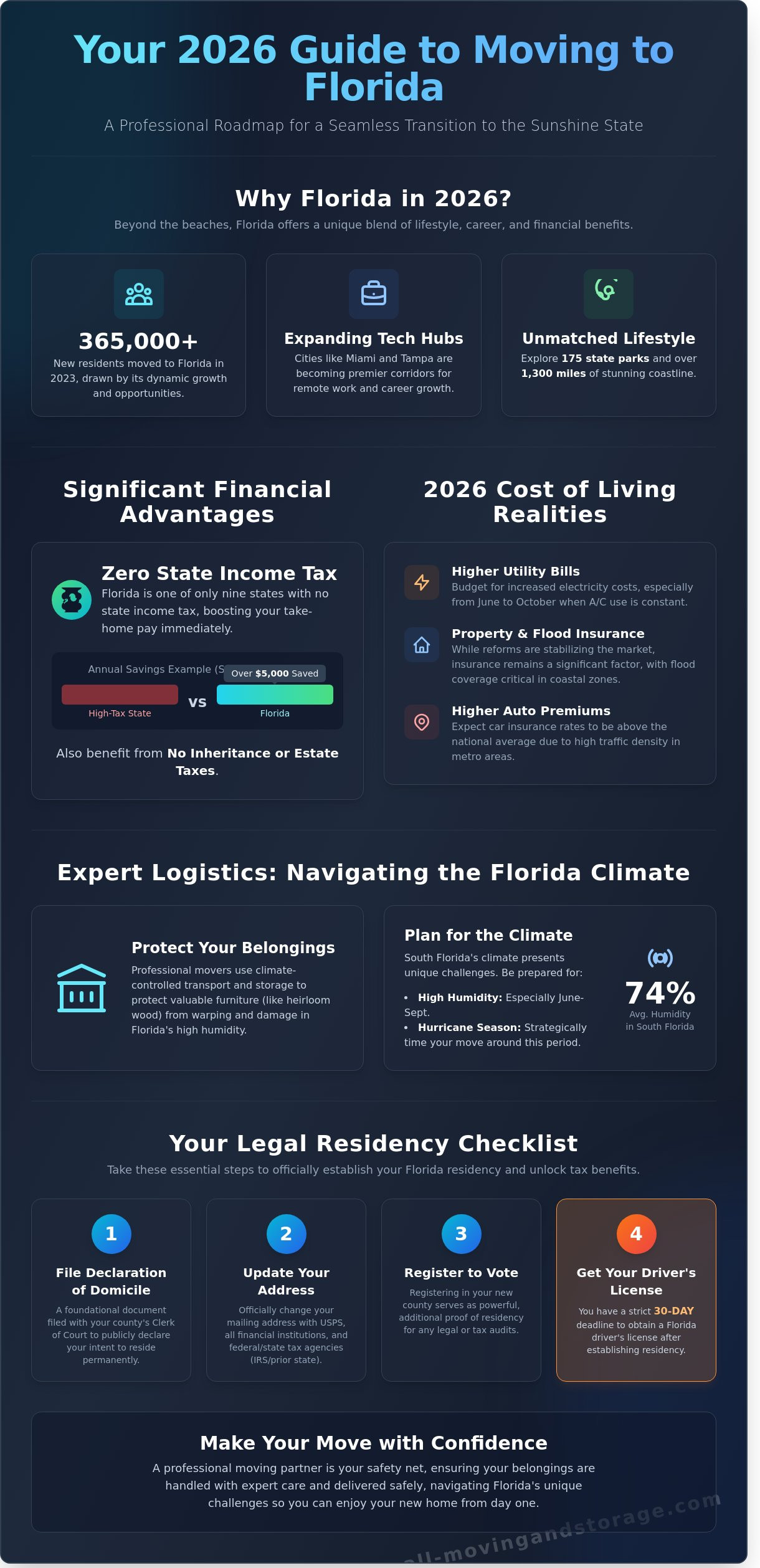
Imagine arriving at your new home in January 2026 only to find your heirloom wooden table warped because you didn’t account for the 74 percent average humidity found in South Florida. It’s a frustrating scenario that many of the 365,000 people who moved to the Sunshine State in 2023 faced when they underestimated the unique logistical challenges of this region. We know that while you’re excited about the lifestyle change, you’re likely worried about hidden costs and the complex paperwork required to establish legal residency. It’s completely normal to feel overwhelmed by the moving process, but you don’t have to handle it alone.
This comprehensive moving to Florida guide provides the professional roadmap you need for a seamless and secure transition. We’ve compiled the essential steps to help you navigate tax requirements and protect your valuable furniture from the tropical climate. You’ll find a structured 12 month relocation timeline and clear instructions on how to claim your Florida homestead exemption to maximize your savings. We also show you how to identify a reliable moving partner in South Florida who will ensure your belongings are handled with expert care and delivered safely to your new front door.
Key Takeaways
- Discover how the 2026 economic landscape and remote work flexibility make Florida’s growing tech hubs a premier choice for career growth and lifestyle.
- Master the legal essentials of establishing residency with our comprehensive moving to Florida guide, covering everything from domicile filings to address updates.
- Explore why South Florida remains a top destination and how to select the ideal community near major hubs like Miami and Fort Lauderdale.
- Learn professional strategies to protect your belongings from extreme humidity and how to strategically time your move around the Florida hurricane season.
- Understand the safety benefits of professional moving services and how secure storage acts as a vital safety net during real estate transitions.
Why Move to Florida? Understanding the 2026 Relocation Landscape
Florida continues to attract thousands of new residents every month. This moving to Florida guide highlights how the state has evolved into a premier destination for both families and professionals. In 2026, the relocation landscape is defined by more than just sandy beaches. It’s a hub for innovation and financial growth. While the climate and outdoor lifestyle remain primary draws, the shift toward permanent residency is fueled by a mature remote work culture and the expansion of major tech corridors in cities like Tampa and Miami.
The Tax Advantages of Florida Residency
Cost of Living Realities in 2026
The housing market in 2026 reflects Florida’s popularity. Popular South Florida communities in Miami-Dade and Broward counties maintain higher price points due to high demand. You should also prepare for specific operational costs that differ from other regions:
Our team at All American Moving and Storage understands these transitions. We provide reliable, professional services to ensure your belongings are handled with care. We’re here to make your move fast and efficient so you can start enjoying the Florida lifestyle immediately. If you’re ready to start your journey, call us now for a consultation.
Establishing Residency: Your Legal Florida Moving Checklist
Transitioning your legal life to the Sunshine State requires more than just unpacking boxes. To fully benefit from Florida’s tax-friendly environment, you must prove your intent to make it your permanent home. This moving to Florida guide highlights the essential steps to ensure you’re legally recognized as a resident. First, file a Declaration of Domicile with the Clerk of the Circuit Court in your new county. This sworn statement is a foundational document for tax purposes and serves as public record of your relocation.
You must also update your mailing address with the USPS and all financial institutions. Register to vote in your new county as soon as you arrive; this provides additional proof of residency for legal and tax audits. Finally, notify the tax department of your previous state about your permanent move. This step is critical to avoid double taxation, especially if you’re relocating from a high-tax state like New York or California. Keeping a paper trail of these changes protects your financial interests during the transition.
Drivers Licenses and Vehicle Registration
Florida law is strict about timelines for new arrivals. You have exactly 30 days to obtain your Florida driver’s license after Establishing Florida residency. To meet REAL ID requirements, you’ll need to bring your original birth certificate or passport, your Social Security card, and two documents proving your new Florida residential address. Vehicle registration is even more urgent. You must register your car and obtain Florida plates within 10 days of starting employment, enrolling children in public school, or establishing residency. Be prepared to pay an initial registration fee, which is approximately $225 for vehicles that haven’t been previously registered in the state.
Navigating the Homestead Exemption
The Florida Homestead Exemption is a significant financial benefit that can decrease your property’s assessed value by up to $50,000. This leads to substantial savings on annual property taxes. To qualify, the home must be your primary residence as of January 1st of the tax year. The most valuable part of this law is the “Save Our Homes” cap. This provision limits annual increases in the assessed value of your homesteaded property to 3% or the percent change in the Consumer Price Index, whichever is lower. This protection prevents your taxes from skyrocketing even if local property values surge by 20% or more in a single year.
Choosing Your New Home: South Florida’s Top Communities
South Florida remains the premier destination for relocators in 2026 because it offers a unique blend of economic opportunity and high quality of life. Proximity to major hubs like Miami and Fort Lauderdale is a primary factor for most families. These cities serve as international business gateways, providing access to over 1,000 multinational corporations. When you follow a moving to Florida guide, you will find that the choice between coastal and inland living defines your daily experience. Coastal areas provide immediate beach access and high walkability, while inland communities often offer more square footage and private acreage for your investment.
Evaluating school districts is a top priority for 85% of relocating families. Florida uses a state grading system to rank schools from A to F, and many South Florida municipalities consistently earn top marks. Beyond education, look for amenities like municipal parks, community pools, and proximity to healthcare facilities. Once you select your neighborhood, remember that state law requires you to update your credentials within 30 days. You can find the necessary forms and appointment portals at the Florida Highway Safety and Motor Vehicles website to ensure your transition is legally sound.
Spotlight on Weston and Davie, FL
Weston is a 15,000-acre master-planned community that consistently ranks as one of the safest cities in the United States. It’s known for its meticulously maintained landscapes and A-rated public schools. If you prefer a more rustic atmosphere, Davie offers a unique Western charm. With over 165 miles of equestrian trails and sprawling open spaces, Davie provides a rural feel just 15 miles from the urban core. Both areas are ideal for professionals who want a quiet retreat without sacrificing a manageable commute to regional business centers.
The Fort Lauderdale Lifestyle
Fort Lauderdale is famous as the Venice of America because of its 165 miles of navigable waterways. The city has evolved into a sophisticated cultural hub, centered around the Las Olas Boulevard business and dining district. You’ll find world-class beaches and a thriving maritime industry that supports thousands of local jobs. This moving to Florida guide recommends securing a professional moving company in Fort Lauderdale early in your planning process. Professional movers understand the specific logistics of high-rise buildings and gated communities, ensuring your belongings arrive safely and efficiently. Making the right choice in housing and support services will make your 2026 relocation feel seamless and professional.
Expert Logistics: Packing and Timing for the Florida Climate
Moving to Florida requires more than just standard boxes. You must account for the state’s unique environmental factors. Florida’s average humidity level stays around 74 percent year-round. This moisture can destroy electronics and fine wood furniture if you don’t pack them correctly. Wood expands in the heat, while electronic components can suffer from internal condensation during the transition from a cool truck to a humid driveway. Using this moving to Florida guide will help you protect your assets from these specific climate risks.
Downsizing is a practical necessity for this relocation. Most Florida homes don’t have basements. You’ll likely lose a significant amount of storage space compared to northern homes. Focus on what you actually need in a tropical setting. Leave heavy wool coats, snow blowers, and winter tires behind. If you haven’t used an item in the last 12 months, it shouldn’t make the trip. This reduces your load and lowers your overall transportation costs.
Timing is another critical factor. Hurricane season runs from June 1 through November 30. Moving during these months requires a flexible schedule and a reliable weather app. Tropical storms can delay shipments by several days or force sudden route changes. Always have a contingency plan for your arrival date.
Prepare a “Day One” kit to keep in your personal vehicle. This kit should include:
- Bottled water and electrolyte drinks for hydration
- Sunscreen with SPF 30 or higher
- Extra towels for sweat or sudden rain showers
- Basic tools and box cutters
- Phone chargers and external batteries
Packing Strategies for Heat and Humidity
Packing for a tropical climate is a specialized skill. Don’t wrap wood furniture in plastic stretch wrap. This traps moisture against the surface and causes mold or “clouding” on finishes. Use breathable moving blankets instead. For antiques, professional packing services are essential. Skilled movers use custom crating to stabilize delicate joints that might loosen in the heat. If you’re bringing indoor plants, check Florida’s USDA agricultural inspections. Ensure your plants are pest-free before they cross the state line to avoid delays at checkpoints.
Timing Your Relocation
The peak moving season in Florida occurs between May and September. Demand is highest during these months, which often leads to higher service rates. If your schedule allows, plan a winter move between December and February. You’ll enjoy temperatures in the 60s or 70s rather than the 90s. This timing also makes it easier to coordinate a moving long distance cheap strategy by securing lower off-season rates. Our team helps you find the most efficient window for your budget and comfort.
Making the Move: Why a Professional Partner Matters
Moving across state lines is a massive undertaking that involves much more than just loading a truck. While a DIY approach might seem cost-effective at first, the hidden expenses often stack up quickly. Fuel prices, truck insurance, and the physical risk of moving heavy furniture can turn a 1,000-mile journey into a logistical nightmare. Choosing a professional partner ensures your belongings arrive safely and on schedule. This moving to Florida guide emphasizes that reliability is the most important factor in a successful 2026 relocation.
Full-service movers handle the heavy lifting, literally and figuratively. They provide expert packing and unpacking services that protect fragile items like glassware or electronics. This level of care reduces the immense stress associated with a cross-country move. When you hire experts, you aren’t just paying for labor; you’re buying peace of mind. You won’t have to worry about driving a massive vehicle through unfamiliar South Florida traffic or navigating tight residential streets in a 26-foot box truck.
The All American Moving and Storage Difference
We treat your possessions as if they were our own. Our team brings decades of experience to every job, whether you’re planning a local move in Weston or a complex long-distance haul from the Northeast. We understand the unique challenges of the Florida climate and the specific logistics of the region. This local expertise is why we are the trusted moving company Fort Lauderdale families rely on for efficient transitions. We prioritize clear communication and dependable service from the first box to the last.
Secure Storage Solutions in Davie, FL
Real estate timelines don’t always align perfectly. If your new home isn’t ready on moving day, our secure storage facility in Davie provides a necessary safety net. We offer private, secure units for both short-term gaps and long-term needs. Our storage services integrate directly with your moving plan, so you don’t have to coordinate with multiple vendors or rent additional trucks.
- Private and secure units protected by modern security systems.
- Seamless transition from the moving truck directly into storage.
- Flexible options for unexpected real estate closing delays.
- Climate-conscious storage to protect your goods from Florida humidity.
Secure Your Seamless Transition to South Florida
Relocating to the Sunshine State in 2026 requires more than just a sense of adventure. It demands a clear legal strategy for residency and a deep understanding of South Florida’s unique community layouts. This moving to Florida guide highlights that success depends on managing logistical timing and climate-specific packing to protect your belongings from high humidity levels. Whether you’re settling in the residential suburbs of Weston or the coastal neighborhoods of Fort Lauderdale, having a local expert makes the difference between a chaotic transition and a seamless arrival.
All American Moving and Storage is a family-owned and operated company based right here in South Florida. We specialize in relocations throughout Weston, Davie, and Fort Lauderdale; we provide professional packing and secure storage solutions that keep your items safe during every step of the journey. Don’t leave your 2026 move to chance when you can rely on certified professionals who know these neighborhoods inside and out.
GET A FREE QUOTE from All American Moving and Storage today!
Your new life in Florida is waiting, and we’re ready to help you get there with total peace of mind.
Frequently Asked Questions
Is it expensive to move to Florida in 2026?
Costs depend on your starting location and the volume of items, but Florida remains a high-demand destination with 1,000 people moving to the state daily. According to 2024 industry reports, an average interstate move costs around $4,800. This moving to Florida guide recommends booking your professional movers at least 60 days in advance to secure the best rates. You should also budget for fuel surcharges and professional packing materials to ensure a smooth transition.
How long does it take to become a legal Florida resident?
You become a legal resident the moment you establish a permanent home and show intent to stay, but official recognition requires specific steps. You must file a Declaration of Domicile with your local County Clerk of the Courts to formalize your status. For state tuition or specific tax benefits, most institutions require you to maintain residency for 12 consecutive months. Don’t forget to update your driver’s license within 30 days of your move to comply with state law.
Do I need to pay taxes in my old state after moving to Florida?
You’ll likely owe partial-year income taxes to your previous state for any money earned before your official move date. Florida is one of the few states with no state income tax, which provides immediate financial relief for new residents. It’s vital to keep your 2026 closing statements or lease agreements as proof of your relocation date. This documentation prevents your former state from attempting to tax your full annual income after you’ve left.
What is the best month to move to Florida?
The best time to move is between November and February when temperatures average a mild 70 degrees. Moving during the winter months helps you avoid the 90 percent humidity levels and extreme heat typical of July and August. You’ll also stay clear of the Atlantic hurricane season, which runs from June 1 through November 30. Scheduling your relocation during the cooler off-peak season often results in a more comfortable and efficient moving day.
How do I protect my furniture from Florida’s humidity during a move?
Protect your belongings by using breathable moving blankets rather than wrapping wood or leather items directly in plastic. Trapped moisture can lead to mold growth or warping when humidity levels exceed 60 percent during the summer. If you’re following this moving to Florida guide for a long-distance relocation, ensure your mover uses climate-controlled storage for sensitive items. Our professional teams use specialized packing techniques to keep your furniture safe and dry regardless of the weather.
Can a moving company also provide storage if my new home isn’t ready?
Yes, we offer secure and private storage solutions for customers who need a bridge between their old and new homes. Our facility is monitored 24 hours a day to ensure your household goods remain safe and protected. This all-in-one service eliminates the stress of coordinating with multiple companies and moving your items twice. We simply load your belongings, store them securely, and deliver them when your new Florida residence is ready for move-in.
What are the first steps to take when I arrive in Florida?
Your first priority is visiting a local tax collector’s office to obtain a Florida driver’s license and register your vehicle within 30 days. You should also register to vote and file for the Florida Homestead Exemption if you’ve purchased a primary residence. This exemption can decrease your home’s taxable value by up to $50,000, providing significant property tax savings. Completing these tasks early ensures you’re legally compliant and fully integrated into your new community.
Why should I choose a local South Florida mover over a national van line?
Local movers offer specialized knowledge of South Florida’s unique geography, including narrow coastal roads and strict gated community regulations. National van lines often hire temporary contractors, but a local company uses its own certified, professional staff for every job. We understand the local weather patterns and traffic flow, which keeps your move on schedule and stress-free. Choosing a local expert ensures your belongings are handled with the care and precision that only an area specialist can provide.