
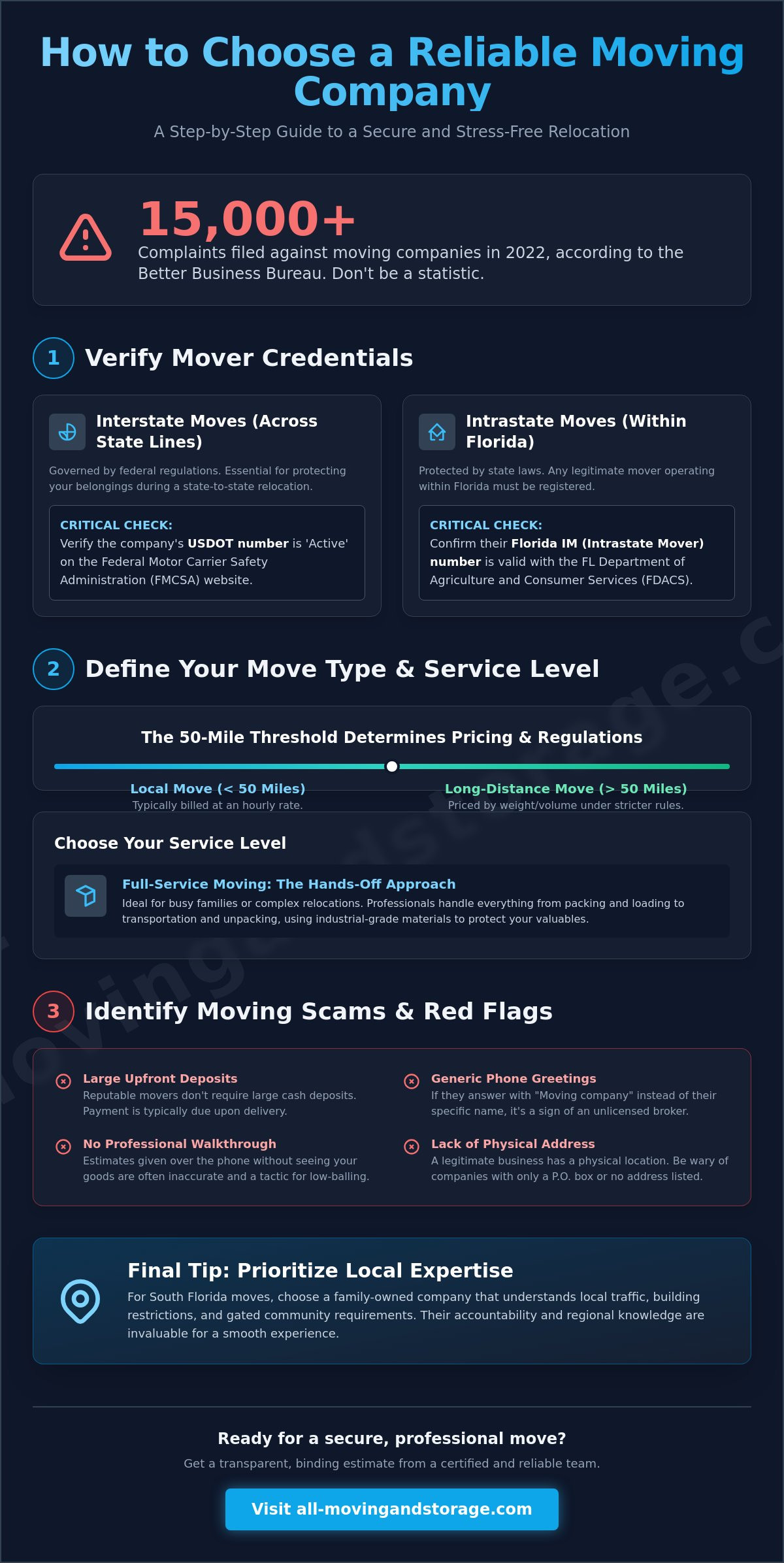
The Better Business Bureau reported more than 15,000 complaints against moving companies in 2022, highlighting a growing concern for families planning a relocation. If you’re feeling anxious about hidden fees or the safety of your fragile antiques, you aren’t alone. Understanding exactly how to choose a moving company is the only way to protect your belongings and your budget from common industry pitfalls.
It’s natural to feel overwhelmed by the difference between binding and non-binding estimates or the complex fine print in insurance contracts. You deserve a move that’s handled with care and professional expertise. We’ve developed this guide to give you a dependable framework for vetting every mover you interview. Our goal is to ensure your chosen team is certified, skilled, and reliable. We’ll walk you through a three-step verification process to identify red flags early, decode pricing structures, and select a team that treats your personal property with the respect it deserves.
Key Takeaways
- Verify a mover’s legal authority using USDOT numbers and Florida IM registration to ensure your household goods are handled by certified professionals.
- Master the essential steps of how to choose a moving company by decoding the difference between binding and non-binding estimates during a professional walkthrough.
- Protect your relocation budget by identifying industry red flags, such as large upfront deposits and generic phone greetings used by unlicensed brokers.
- Learn why local expertise and family-owned accountability are critical for navigating South Florida’s unique traffic patterns and gated community requirements.
- Understand the 50-mile threshold to ensure your contract requirements align correctly with local or long-distance moving regulations.
Understanding Your Move: Types of Moving Companies and Service Levels
A professional moving company provides the essential labor, transportation, and logistics required to relocate household goods safely. When you research Types of Moving Companies, you’ll see that services vary based on the level of involvement you prefer. Learning how to choose a moving company starts with identifying whether you need a basic transport service or a comprehensive relocation partner. Understanding these categories helps you set a realistic budget and timeline for your 2026 move.
Distance is the primary factor that determines your contract requirements and pricing structure. Industry standards typically classify moves under 50 miles as local. These are often billed at an hourly rate. Once you cross that 50-mile threshold or a state line, the move becomes long-distance or interstate. This shift changes how your shipment is weighed and how the final price is calculated according to federal guidelines. Identifying your move type early ensures you ask the right questions during the quoting process.
Full-Service Moving: The Hands-Off Approach
A standard full-service package includes professional packing, loading, transportation, and unpacking at your destination. This is the most reliable option for busy families or corporate relocations where time is a primary constraint. Skilled movers use industrial-grade materials to wrap high-value items, which significantly reduces the risk of vibration damage during transit. This service level ensures your belongings are handled with care from the moment the crew enters your home until the last box is placed in your new living room. It’s a secure way to manage a complex move without the physical strain of heavy lifting.
Local vs. Intrastate vs. Interstate Moves
Local moves in South Florida, including relocations within Weston, Davie, or Fort Lauderdale, are typically defined by a distance of less than 50 miles. If your move stays within Florida but exceeds that distance, it’s an intrastate move. Florida’s consumer protection laws under Chapter 507 of the Florida Statutes require movers to maintain specific insurance levels and register with the Department of Agriculture and Consumer Services. When your move crosses state lines, it becomes an interstate move governed by the Federal Motor Carrier Safety Administration (FMCSA). These federal regulations require companies to provide you with a “Your Rights and Responsibilities When You Move” booklet, ensuring a transparent process.
Specialty movers provide essential expertise for items that standard crews aren’t equipped to handle. Pianos, grandfather clocks, and fine art require specific rigging techniques and custom crating. If you have high-value collections, look for a company that offers climate-controlled storage and specialized equipment. This level of professional care prevents structural damage to delicate instruments and preserves the value of your investments. As you evaluate how to choose a moving company for these unique items, prioritize those with documented experience in specialty logistics to ensure a damage-free experience.
The Verification Phase: Licenses, Insurance, and Florida Regulations
Confirming a mover’s legal standing is the most critical step when you’re learning how to choose a moving company. In 2026, digital scams and “phantom” movers have become more sophisticated, making manual verification essential. You shouldn’t take a sales representative’s word for it. Instead, you need to see active, valid credentials that match the company’s physical location and name.
Checking Federal and State Credentials
Every interstate mover must possess a USDOT number issued by the Department of Transportation. This 7-digit identifier allows you to access the company’s safety records and complaint history. You can use the FMCSA search tool to review Federal Mover Regulations and confirm the company’s authority to transport your household goods across state lines. If the status is “inactive” or “pending,” walk away immediately.
For moves within the state, Florida law requires all movers to register with the Florida Department of Agriculture and Consumer Services (FDACS). Local movers in South Lauderdale or Miami must display a Florida Intrastate Mover (IM) number on their marketing materials and trucks. A valid license is the first non-negotiable requirement for any professional hire. You can verify these numbers through the FDACS online portal to ensure the company has no history of unresolved consumer complaints.
Decoding Moving Insurance Options
Standard moving quotes usually include Released Value Protection. This is the minimum coverage required by law, and it’s often referred to as the 60 cents per pound myth. If a mover drops a 100-pound television worth $2,000, they’re only liable for $60 under this plan. This basic level of coverage is rarely enough for modern electronics or high-end furniture. You should always ask about Full Value Protection, which requires the mover to repair, replace, or provide a cash settlement for the current market value of lost or damaged items.
Professional companies will provide clear documentation explaining these choices. Understanding why an insured mover is a non-negotiable helps you avoid the financial ruin that follows a major truck accident or warehouse fire. Always check that the company’s insurance policy is current and covers the full scope of your inventory.
Verify the company’s physical address before signing any contract. Many fraudulent operators use virtual offices or P.O. boxes to hide their lack of equipment. Use satellite imagery to confirm the address is a legitimate warehouse or office space rather than a residential apartment. If you’re planning a relocation, it’s wise to get a free quote from a provider that maintains a physical presence in your community. A real office means real accountability. This simple check ensures you aren’t handing your life’s belongings over to a company that only exists on a website. When you understand how to choose a moving company based on hard data, you eliminate 90% of the risks associated with residential relocation.
Comparing Quotes: Decoding Moving Estimates Without Surprises
Never accept a moving estimate over the phone or via email without a visual inspection. This is the golden rule for anyone learning how to choose a moving company in 2026. A reputable mover needs to see the volume and weight of your belongings to provide an accurate figure. Without a walkthrough, your final bill could increase by 25 percent or more on moving day due to unforeseen labor needs. Reliable movers prioritize transparency by seeing your home’s layout first.
The In-Home or Virtual Walkthrough
Professional movers need to calculate the specific weight of your shipment. During the walkthrough, show the estimator every closet, the attic, and the garage. Your quote is only as reliable as the inventory list you provide. Ask specific questions about access points. Mention if the truck must park more than 75 feet from your door or if there are multiple flights of stairs. When you are looking for a long distance moving quote, ensure the estimator includes every bulky item, such as treadmills or safes, to avoid mid-transit price hikes.
When Comparing Moving Quotes, you will typically see three types of estimates:
- Non-Binding Estimates: These are projections. The final cost depends on the actual weight of your items after they are loaded. It offers the least protection for your wallet.
- Binding Estimates: This is a fixed price. You pay the quoted amount even if your shipment weighs less than expected.
- Binding-Not-To-Exceed: This is the industry standard for high-quality service. It ensures you won’t pay more than the estimate, but if your shipment is lighter than predicted, your price drops.
Understanding Surcharges and Hidden Fees
The base price rarely tells the full story of your moving costs. You must identify potential add-on fees before signing. Common surcharges include fuel adjustments, stair fees, and “long carry” charges if the movers must walk a significant distance from the truck to your door. In 2026, many companies also apply specialized handling fees for electronics or antiques.
Always read the fine print on the moving contract. The most critical document is the Bill of Lading. This is your final legal contract that summarizes all charges and delivery terms. It must match the terms of your original estimate. If a mover refuses to provide a written breakdown of these potential costs, it’s a red flag. Knowing how to choose a moving company requires you to verify that every service, from packing materials to transit insurance, is clearly itemized to prevent surprise charges at your new doorstep.
Identifying Red Flags: How to Spot a Moving Scam
Learning how to choose a moving company involves more than just comparing prices; it requires a keen eye for deceptive practices. According to 2024 data from the Better Business Bureau, consumers filed over 15,000 complaints regarding moving and storage services. Most of these issues stem from scams that could have been avoided by spotting specific red flags early in the process.
Reputable movers rarely ask for significant cash upfront. If a company demands a deposit exceeding 20% of the total estimate before any work begins, you should proceed with caution. Professional companies typically collect payment upon delivery or through a structured schedule that doesn’t involve large, untraceable cash payments. This ensures the mover remains accountable for the safety of your items throughout the journey.
Pay close attention to how a company answers your initial call. A generic greeting like “Movers” or “Moving Services” instead of a specific business name is a sign of a call center broker. These entities often lack their own trucks and staff. Professional businesses invest in their brand and will always identify themselves clearly to build immediate trust with the customer.
The “low-ball” estimate is perhaps the most common trap. If a quote arrives 30% lower than three other competitors, it’s likely a bait and switch tactic. Scammers use these unrealistic figures to secure the job, only to hold your belongings hostage later while demanding thousands of dollars in unforeseen fees. Reliable movers provide detailed, transparent pricing based on actual inventory.
Professional companies arrive in branded equipment that displays their logo and USDOT number. If a crew shows up in a plain, white rental truck, it indicates they lack the proper infrastructure to handle your move safely. This lack of branding often correlates with a lack of insurance and professional training.
Brokers vs. Carriers: Know Who is Actually Moving You
Brokers are sales agents who book your move and then sell the contract to the lowest bidder. This disconnect often leads to lost items and zero accountability because the person you spoke with on the phone isn’t the person carrying your boxes. Always ask directly: “Will your own employees be performing the move?” You can also review direct relocation services reviews to spot patterns where customers were promised one team but received a different, unvetted crew on moving day.
Online Reputation Audit
Go beyond surface-level star ratings by checking the Better Business Bureau for unresolved complaints or recent “F” ratings. Authentic reviews usually contain specific details about the crew’s timing or the care taken with fragile items. If you see dozens of five-star reviews posted in a single 48-hour window, they’re likely fabricated. For residents in Weston or Davie, local referrals from neighbors who have moved within the last 12 months are often more reliable than digital feedback from strangers.
If you want a transparent, professional experience without the stress of hidden fees, contact All American Moving and Storage for a dependable estimate today.
The Final Selection: Why Local Expertise Matters
Knowing how to choose a moving company involves more than just checking online reviews. It requires finding a partner who understands the specific local landscape. Family-owned moving companies provide a level of accountability that national brokers can’t match. When you work with a local team, you’re dealing with professionals whose reputation depends on your satisfaction. They offer personalized service because they’re part of the same community where you live and work. You aren’t just a job number; you’re a neighbor.
Local knowledge is vital in South Florida. Navigating the heavy traffic on I-95 or the Florida Turnpike requires precise timing and route planning. When you are deciding how to choose a moving company for a 2026 relocation, look for a team that has managed thousands of local hauls. Experienced movers understand the unique requirements of gated communities in areas like Weston and Davie. They know how to coordinate with HOA security and manage strict move-in windows. They also plan for the 40% increase in afternoon thunderstorms during the summer months, ensuring your furniture stays dry during the transition.
Before the truck pulls into your driveway, verify your documentation. You must have the following in writing:
- The Order for Service: This confirms the dates and services you’ve requested.
- The Bill of Lading: This is the official contract between you and the mover.
- The Inventory List: A detailed record of every box and piece of furniture loaded.
- Proof of Insurance: Documentation showing both liability and cargo coverage.
Once you select your team, start coordinating your packing schedule and any necessary storage needs immediately. Clear communication with your chosen movers about bulky items or fragile antiques prevents delays on moving day.
The All American Moving and Storage Difference
All American Moving and Storage has served South Florida families for over 24 years. As a family-owned and fully insured mover, we prioritize reliability and professional care. We specialize in both local relocations and long-distance moves, ensuring every item is handled with care. Our team integrates secure storage solutions into our process. This provides a safe, climate-controlled space for your belongings if your new home isn’t ready for immediate move-in.
Ready to Move? Get Your Free Quote
Taking the first step toward your new home is easy with a transparent, no-obligation estimate. We provide accurate, professional quotes for residents in Weston, Davie, and the surrounding areas. Our experts walk you through every detail of the process, so you know exactly what to expect on moving day. We focus on efficiency so you can focus on settling into your new space. Contact us today to start your journey with a team you can trust.
Take Control of Your 2026 Relocation
Mastering how to choose a moving company requires a balance of due diligence and professional intuition. You now have the tools to verify Florida IM registration numbers and identify the warning signs of common moving scams. Remember that the lowest quote often hides the highest risks; prioritize transparency and local reputation instead. All American Moving and Storage has served the South Florida community for over 20 years as a family-owned and operated business. We maintain an A+ rating in Weston and Davie because we treat every item with professional care. Our team is fully insured and licensed under our Florida IM number, ensuring your property is protected from the first box to the final delivery.
You don’t have to navigate the complexities of moving alone. Let our dependable experts provide the seamless, high-quality experience you deserve. GET A FREE QUOTE from All American Moving and Storage and start your next chapter with total confidence.
Frequently Asked Questions
How far in advance should I book a moving company?
You should book your moving company 8 to 12 weeks before your scheduled move date. According to 2025 industry data, 92% of top-rated movers reach full capacity for summer months by early April. When you learn how to choose a moving company early in the process, you secure your preferred date and avoid the 15% premium often charged for last-minute bookings.
Is it cheaper to move on a weekday or a weekend?
Moving on a weekday, specifically Monday through Thursday, is typically 20% to 30% cheaper than a weekend move. Most residential relocations occur on Fridays or Saturdays. Data from 2025 transportation reports indicates that mid-month weekdays offer the highest availability and most competitive rates for professional services because demand is significantly lower.
What is the difference between a binding and a non-binding estimate?
A binding estimate guarantees the total cost of the move based on the inventory listed. A non-binding estimate is a projected cost that changes based on the final weight of your belongings and actual services performed. It’s a critical step in learning how to choose a moving company that provides transparent, reliable pricing for your specific residential needs.
Do moving companies charge extra for stairs or heavy items?
Movers often apply accessorial charges for stairs, long carries, or items exceeding 200 pounds. These fees cover the additional labor and specialized equipment required to handle heavy pieces safely. Professional teams use certified techniques to ensure your property is handled with care, even when navigating multiple flights of stairs or tight hallways.
Should I tip my movers, and if so, how much is standard in 2026?
Tipping is a standard way to recognize efficient and professional service. In 2026, the industry standard is $5 to $10 per hour per mover, or roughly 15% to 20% of the total labor cost for the entire crew. You should provide the tip directly to the lead mover or distribute it individually once the job is finished and your belongings are secure.
What items are moving companies not allowed to transport?
Movers are legally prohibited from transporting hazardous materials like propane tanks, paint thinners, and ammunition. Federal safety regulations also restrict the transport of perishable foods and pressurized canisters. You should pack high-value personal items, such as jewelry or legal documents, in your own vehicle to ensure they remain secure and accessible during the transition.
Can a moving company change the price after the move has started?
A moving company cannot change a binding estimate unless you add items or request extra services not included in the original contract. Under 49 CFR Part 375, movers must provide a revised written estimate if the scope of work changes. Dependable companies prioritize clear communication to ensure there are no surprises on delivery day.
What should I do if my belongings are damaged during the move?
You must file a written claim with the moving company within nine months of the delivery date. Start by noting any visible damage on the Bill of Lading before the movers leave your home. Take clear photographs of the damaged items and keep all packaging materials as evidence for the claims adjuster to review during their investigation.